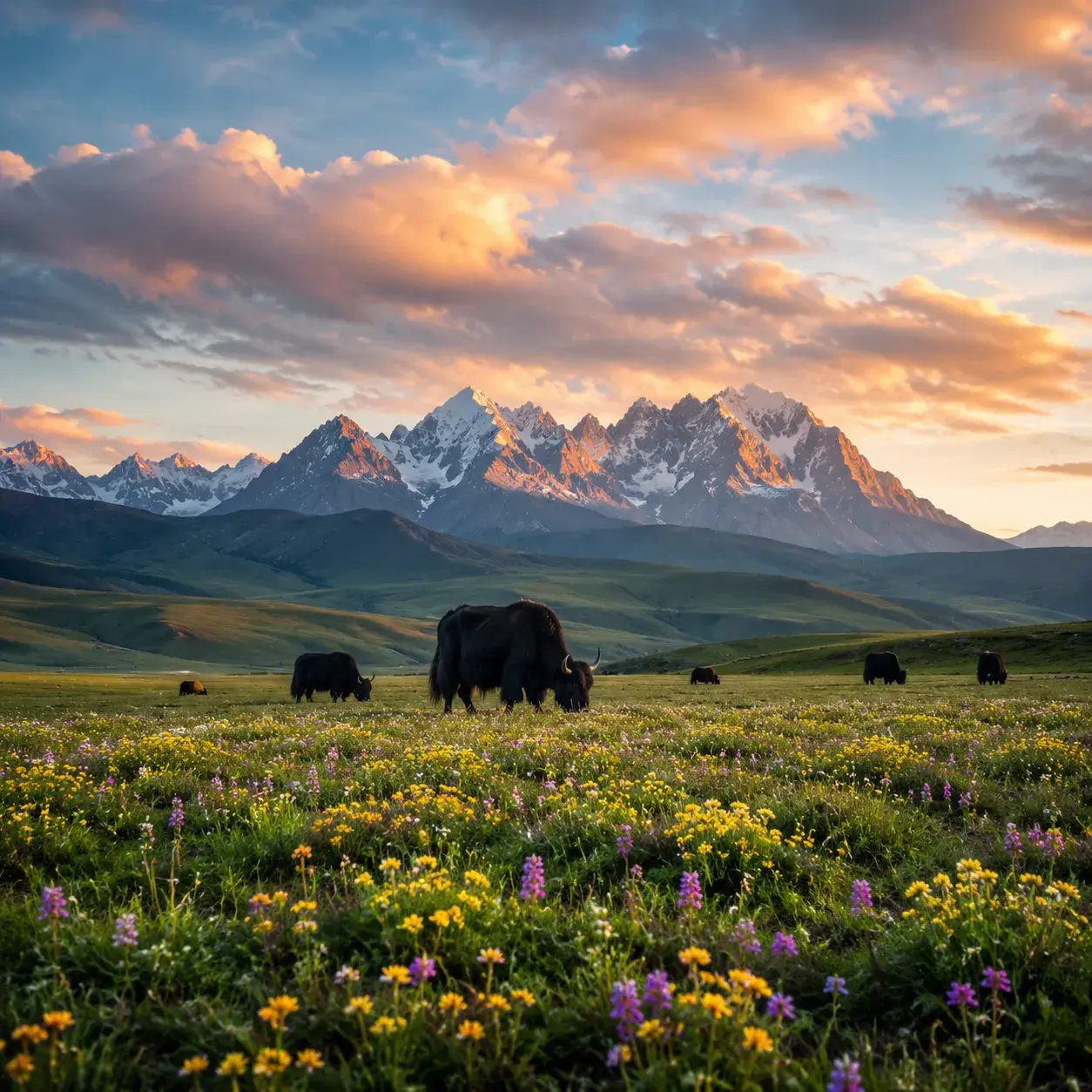
Hulunbuir Grassland
China's largest prairie — endless rolling green, horse riding across the steppe, and overnight stays in a Mongolian yurt on the Russian border.
China's largest prairie — endless green, horse riding and Mongolian yurt stays in summer.
About Hulunbuir Grassland
Hulunbuir is China's largest prairie — 93,000 km² of rolling grass on the Russian border, with the Erguna River bending through it and the occasional nomadic camp. It is a different kind of China: flat, wide, sparsely populated and culturally Mongolian rather than Han. Most travelers spend three days — a day to drive the central steppe, a day at a yurt camp with horse riding, and a day along the Erguna River.
Facts at a Glance
The physical and historical details of Hulunbuir Grassland — useful for understanding the landscape and planning your visit.
| Landscape type | Temperate steppe grassland with riverine wetlands |
| Elevation | 600–800m |
| Area | 93,000 km² of grassland, the largest in China |
| Climate | Continental sub-arctic, -25°C winters, 18–22°C summers, low rainfall |
| UNESCO status | Not UNESCO (Hulun Lake is a national nature reserve) |
Home to the Evenki reindeer herders in the north and the Mongolian herdsmen in the south — the grassland is the cultural heartland of the Bargu Mongol people, with their Naadam festival in July featuring wrestling, archery and horse racing. Yurt (ger) stays, horse-riding and lamb hotpot are central to the experience.
Top things to do
- Stay overnight in a traditional Mongolian yurt under the open steppe sky
- Ride a horse across the prairie with a Mongolian guide
- Drive the scenic route from Hailar to the Erguna River wetlands
- Watch the sunset over the endless grass with no horizon in sight
How to get there
Fly to Hailar (HLD) from Beijing, Hohhot or Shanghai. From Hailar, the best way to explore is by rented car with a local driver, or a 3-day group tour. Public transport is limited and slow on the grassland.
Best time to visit
Late June to early September, with July being peak season for the Naadam festival. Early September brings golden grass and fewer crowds, but most yurt camps close after mid-September.
Season by season
Grass is just turning green, temperatures 5–18°C, very few visitors. Cold nights and possible dust storms.
Lush green, 18–25°C, Naadam festival in July. The only recommended season — the grassland is a desert the rest of the year.
Golden grass in early September, cooler (10–18°C), fewer crowds. Late September is the end of the season.
Brown, frozen, -25°C. Skating on the Erguna river is possible but the grassland is closed to tourism.
Suggested itinerary
Drive 2–3 hours from Hailar to a yurt camp, settle in, and ride horses in the late afternoon.
Drive to the Erguna River bend, see the wetland birdlife, and visit an Evenki reindeer herder's camp.
If visiting in July, attend the Naadam wrestling and archery. Otherwise, return to Hailar via the scenic Shiwei route.
What it really costs
A realistic per-person day budget for Hulunbuir Grassland, excluding international flights. Prices in CNY (1 USD ≈ 7.2 CNY).
Editor's pro tips
Five things we'd tell a friend before they go — the practical details you won't find in a brochure.
- Only visit in summer — the rest of the year the grassland is brown, frozen, or both
- Join a 3-day group tour rather than driving — the area is huge, distances deceptive, and English is limited
- Stay at least one night in a yurt (ger) — it's the entire point, and the night sky over the steppe is exceptional
- Bring layers even in summer — temperatures can drop from 25°C to 8°C overnight
- Try the local lamb hotpot and salty milk tea — they're the standard grassland meals and surprisingly good