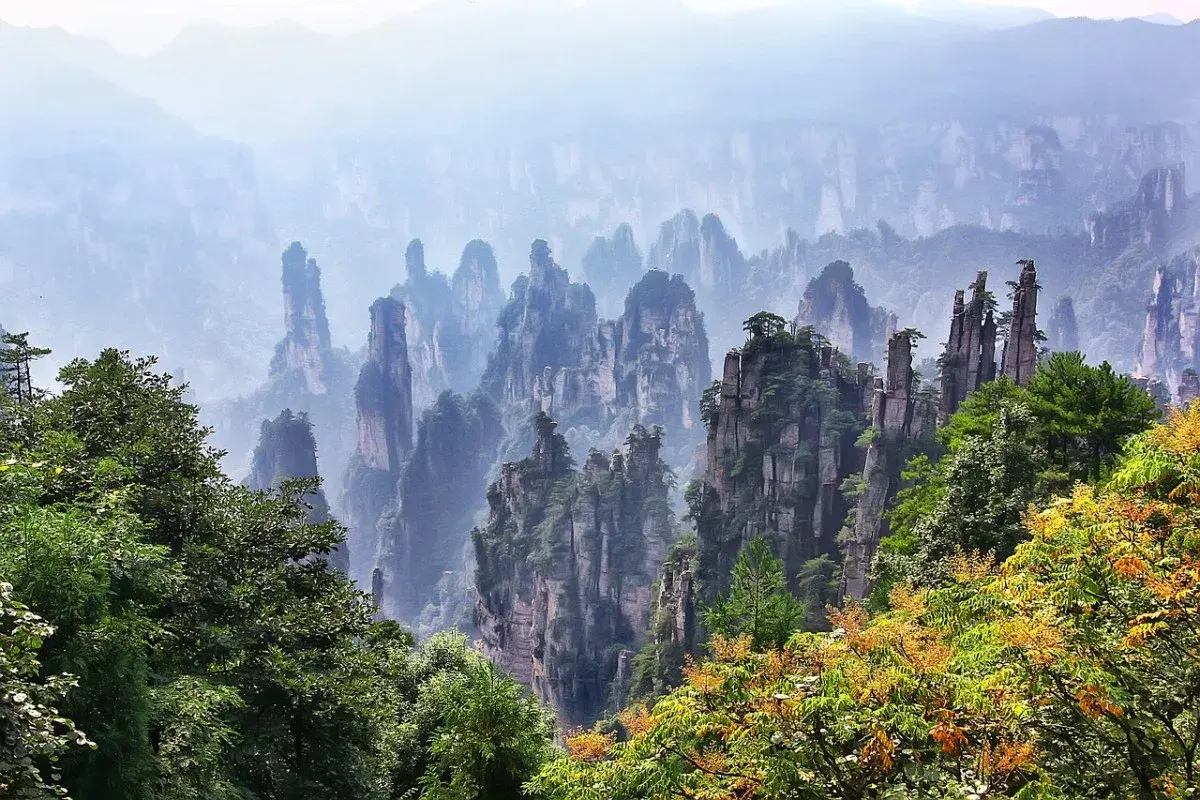
China's dramatic karst mountains and rivers at golden hour
Independent Guide · No Tour Sales

China's Top 10 Natural Wonders

From Zhangjiajie's floating peaks to Jiuzhaigou's turquoise lakes — the 10 best nature places in China, ranked with seasons, costs and honest advice.

The List

Top 10 Natural Wonders in China

Ranked by a writer who has personally visited every one of them — each pick is worth a dedicated trip.

01 Quartz-sandstone pillars of Zhangjiajie National Forest Park in Hunan, China

Zhangjiajie National Forest Park

3,000 quartz-sandstone pillars rising out of forest — the 'floating mountains' of Avatar and one of the most surreal landscapes on Earth.

UNESCO World Heritage Forest park ~CNY 225 (4-day) Full guide

Best for: First-timers who want drama

Hunan Apr–Nov
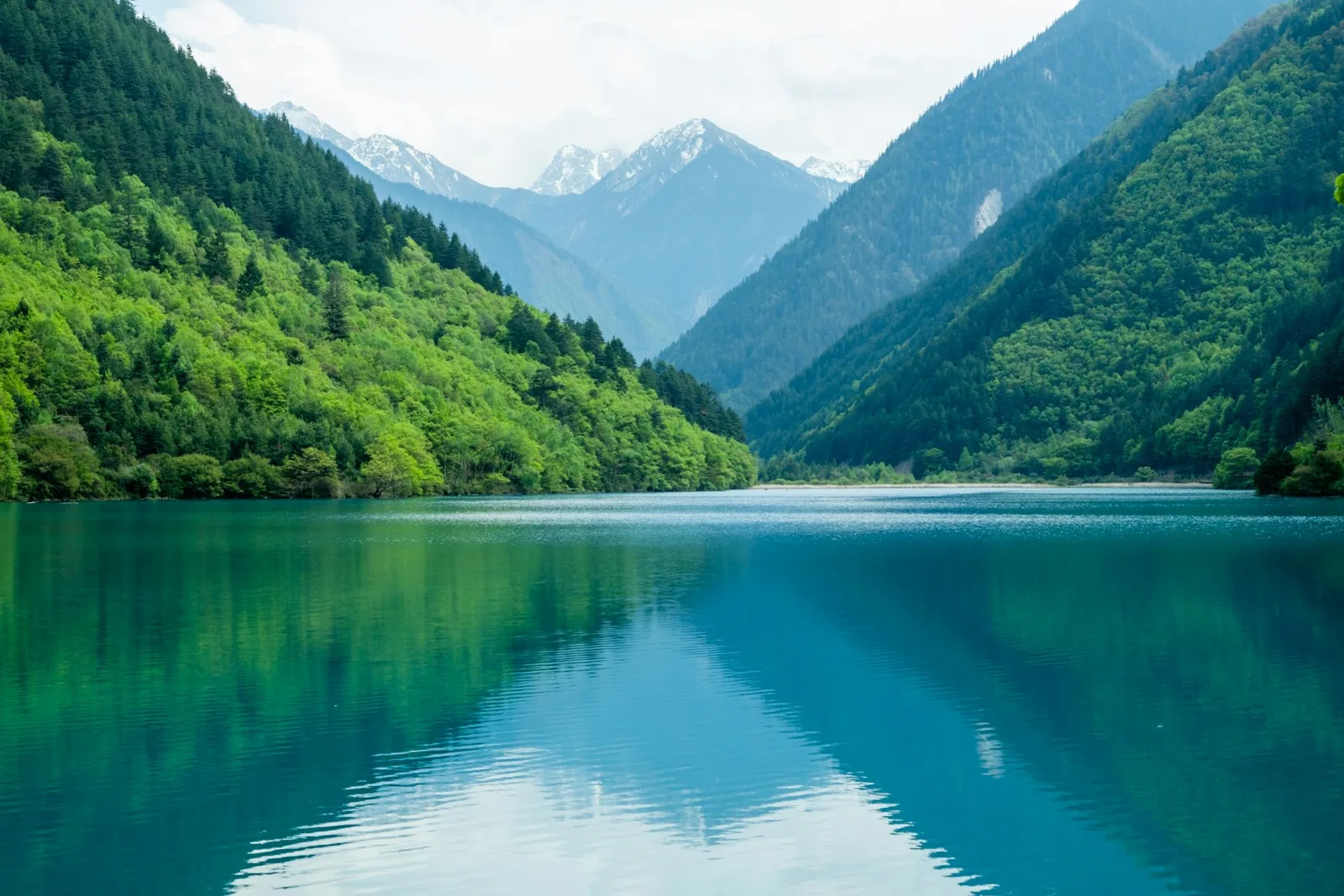
02 Turquoise terraced lakes of Jiuzhaigou Valley in Sichuan, China

Jiuzhaigou Valley

Over 100 tiered lakes in every shade of turquoise, linked by waterfalls and snow peaks — the most photographed water in China.

UNESCO World Heritage ~CNY 169–280; book online ahead

Best for: Photographers & lake lovers

Sichuan Sep–Oct
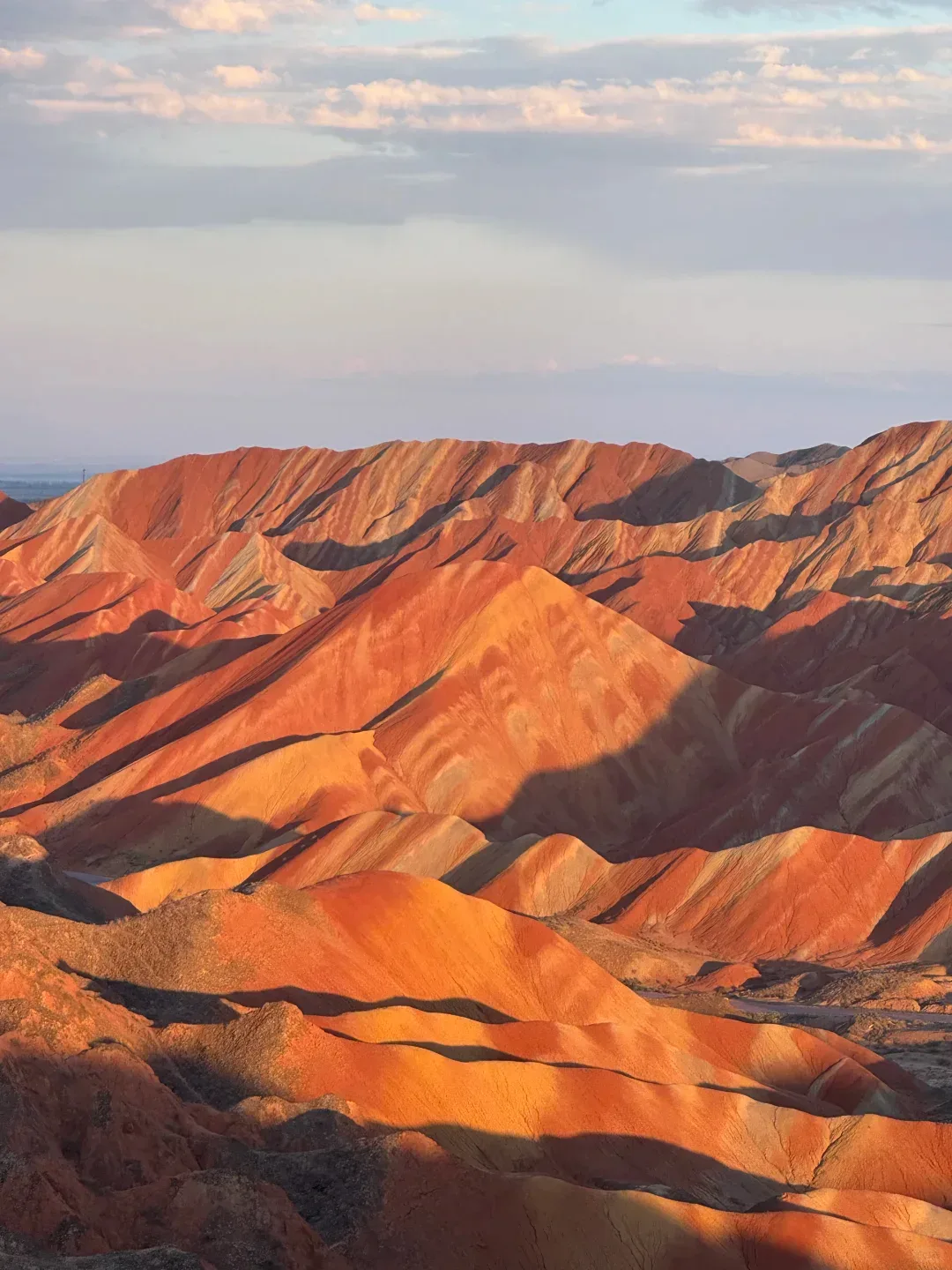
03 Rainbow-striped danxia cliffs of Zhangye in Gansu, China

Zhangye Danxia Rainbow Mountains

Striped red-sandstone ridges that look airbrushed — the colors peak just after sunrise and before sunset.

UNESCO World Heritage ~CNY 75 + shuttle bus

Best for: Photographers chasing color

Gansu Year-round
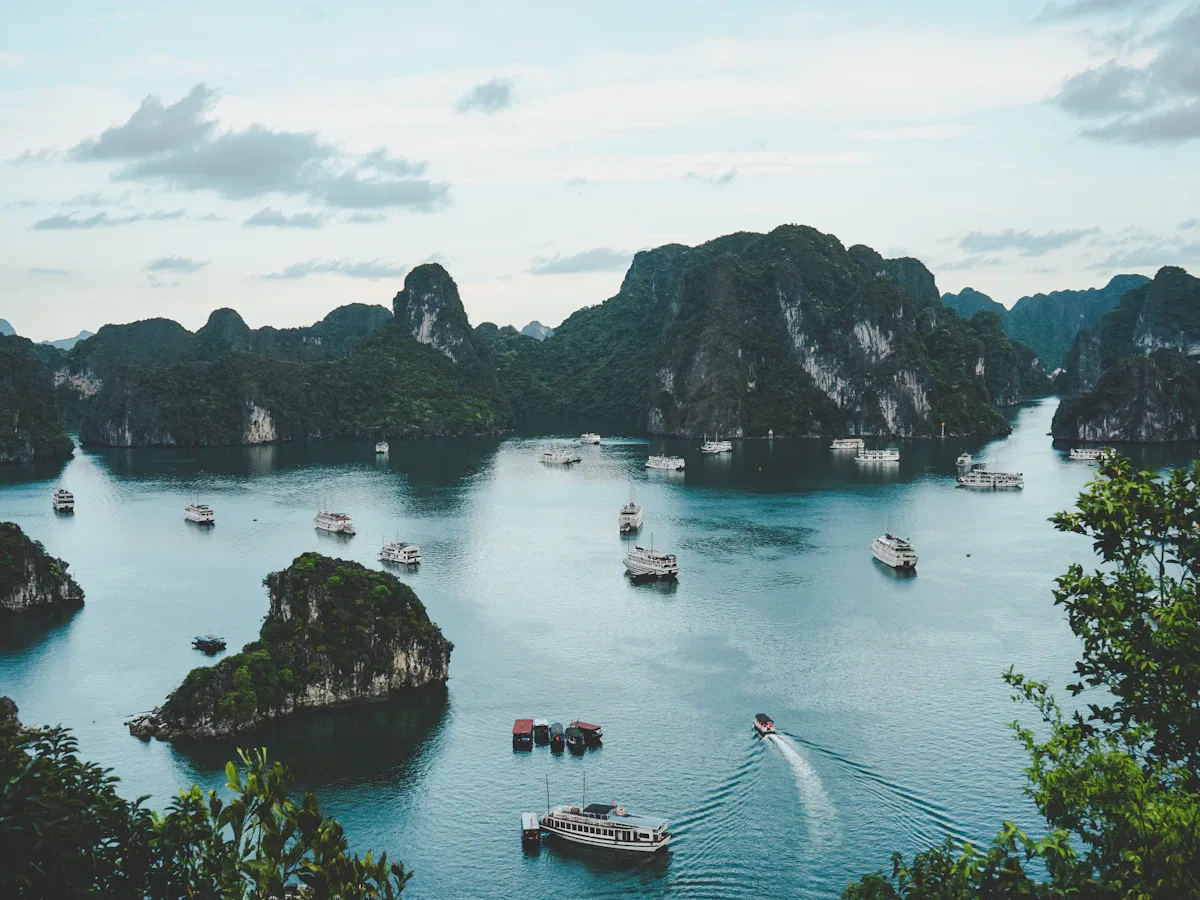
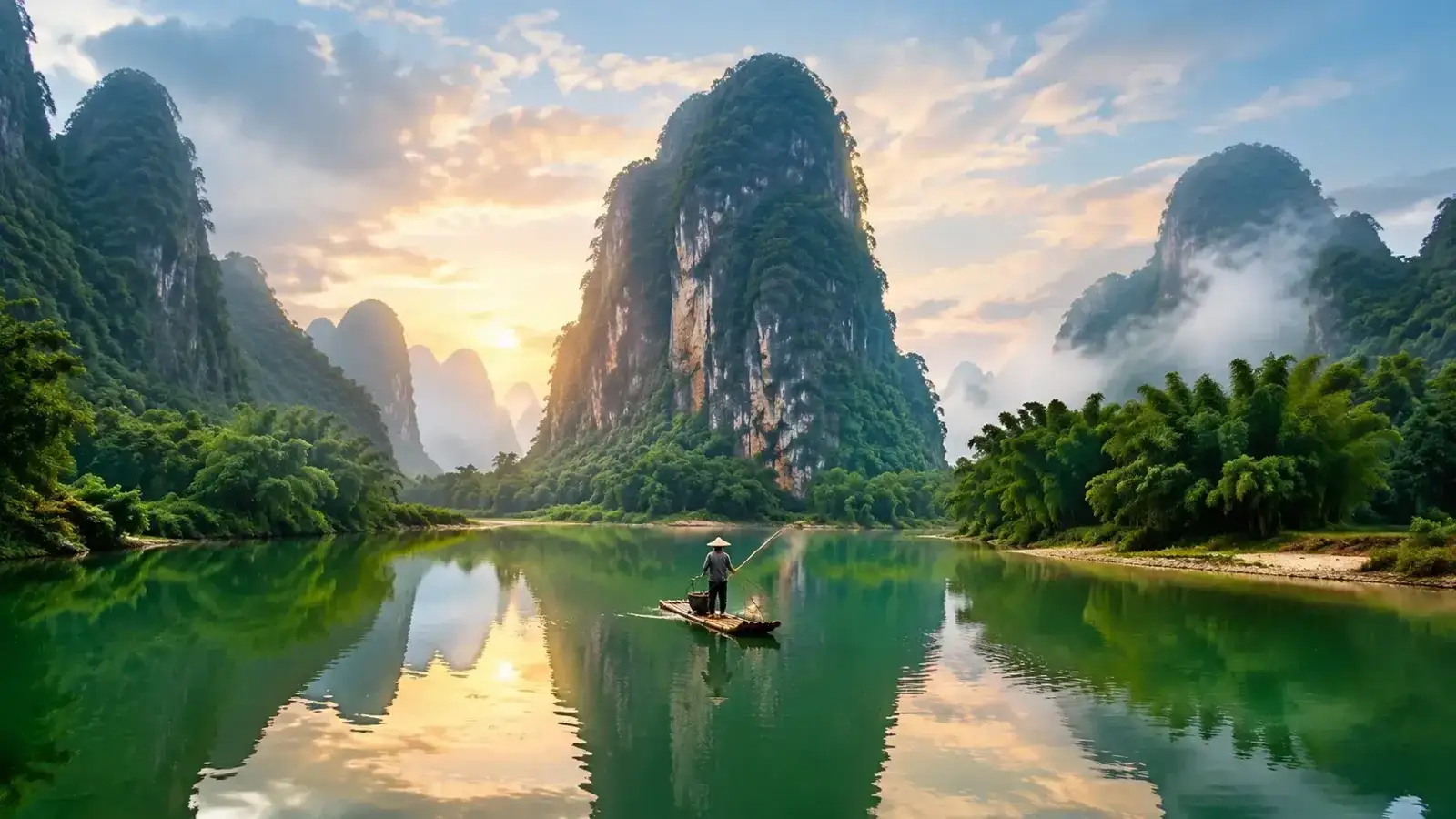
04 Karst peaks along the Li River in Guilin, China

Guilin & Yangshuo Karst

The postcard landscape of China — tower karst peaks above a lazy river, with the easiest logistics of any major natural sight.

UNESCO World Heritage Li River cruise ~CNY 360; parks from CNY 60 Full guide

Best for: First-timers & families

Guangxi Apr–Nov
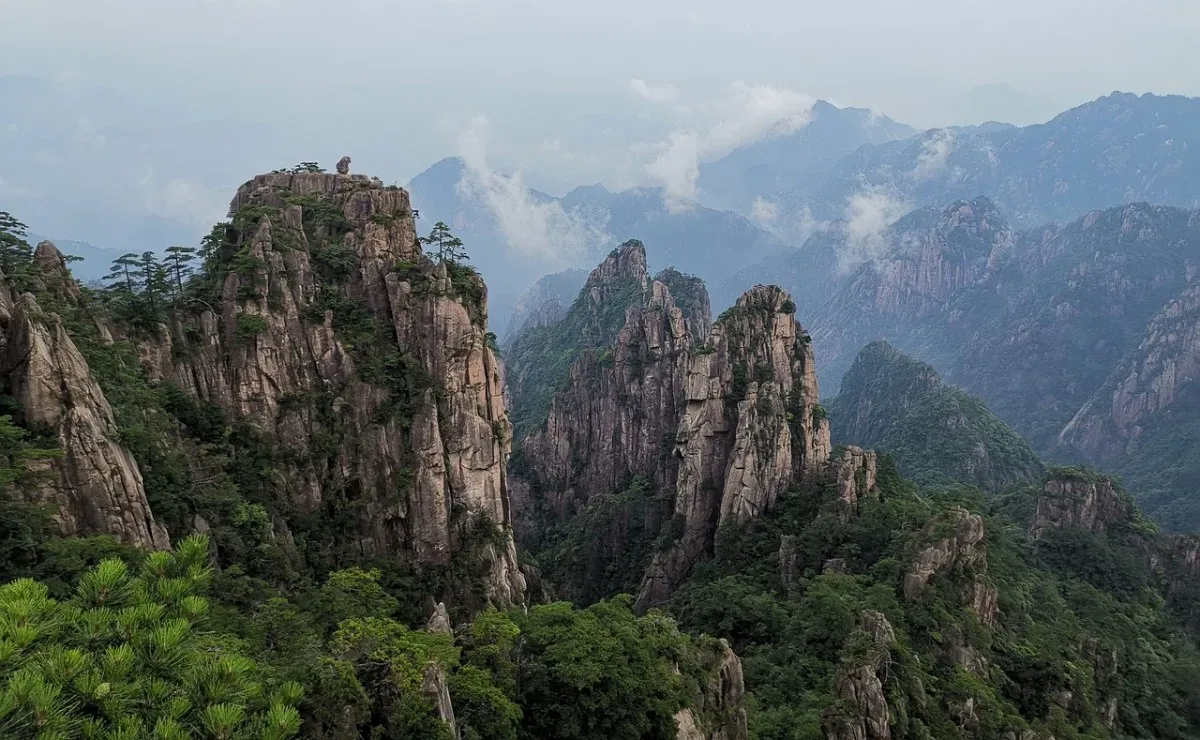
05 Granite peaks of Huangshan in Anhui, China

Huangshan (Yellow Mountain)

The 'loveliest mountain of China' — granite spires, pines and a famous sea of clouds that inspired classical ink painting.

UNESCO World Heritage ~CNY 190 + cable cars ~CNY 80–90

Best for: Hikers & sunrise chasers

Anhui Year-round
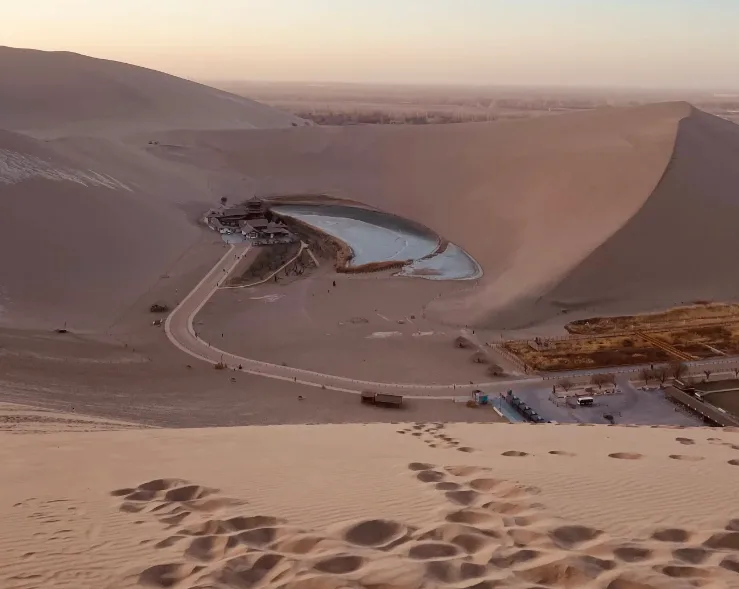
06 Crescent Lake oasis in the Mingsha sand dunes of Dunhuang, China

Crescent Lake & Mingsha Dunes

A crescent-shaped oasis lake held between singing sand dunes on the Silk Road — China's desert icon.

Dunes ~CNY 110 Full guide

Best for: Desert lovers

Gansu Apr–Jun, Sep–Oct
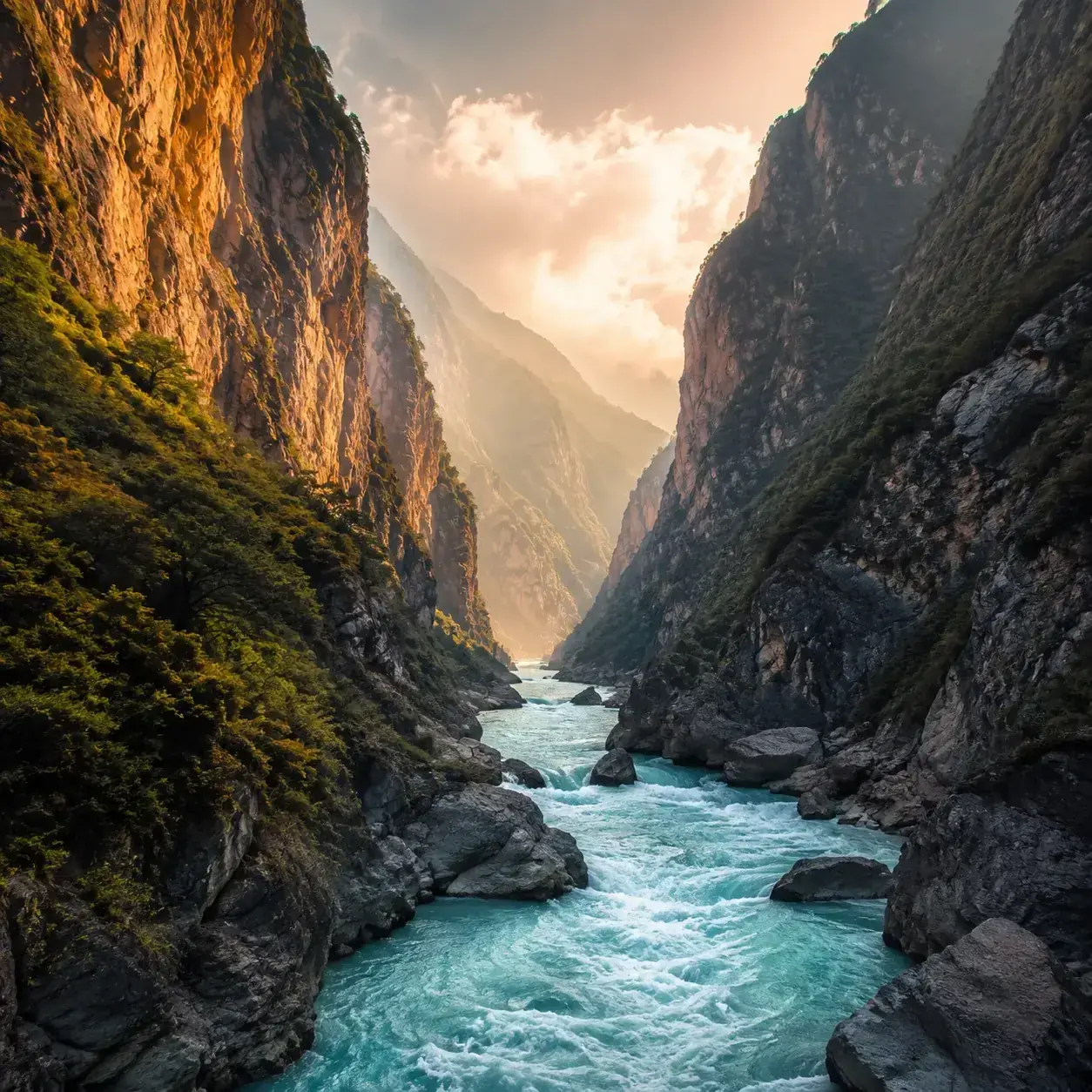
07 The Jinsha River cutting through Tiger Leaping Gorge in Yunnan, China

Tiger Leaping Gorge

One of the deepest river canyons on Earth, carved between 5,000m snow peaks — with a world-class two-day hike.

UNESCO World Heritage ~CNY 45 Full guide

Best for: Hikers

Yunnan Year-round
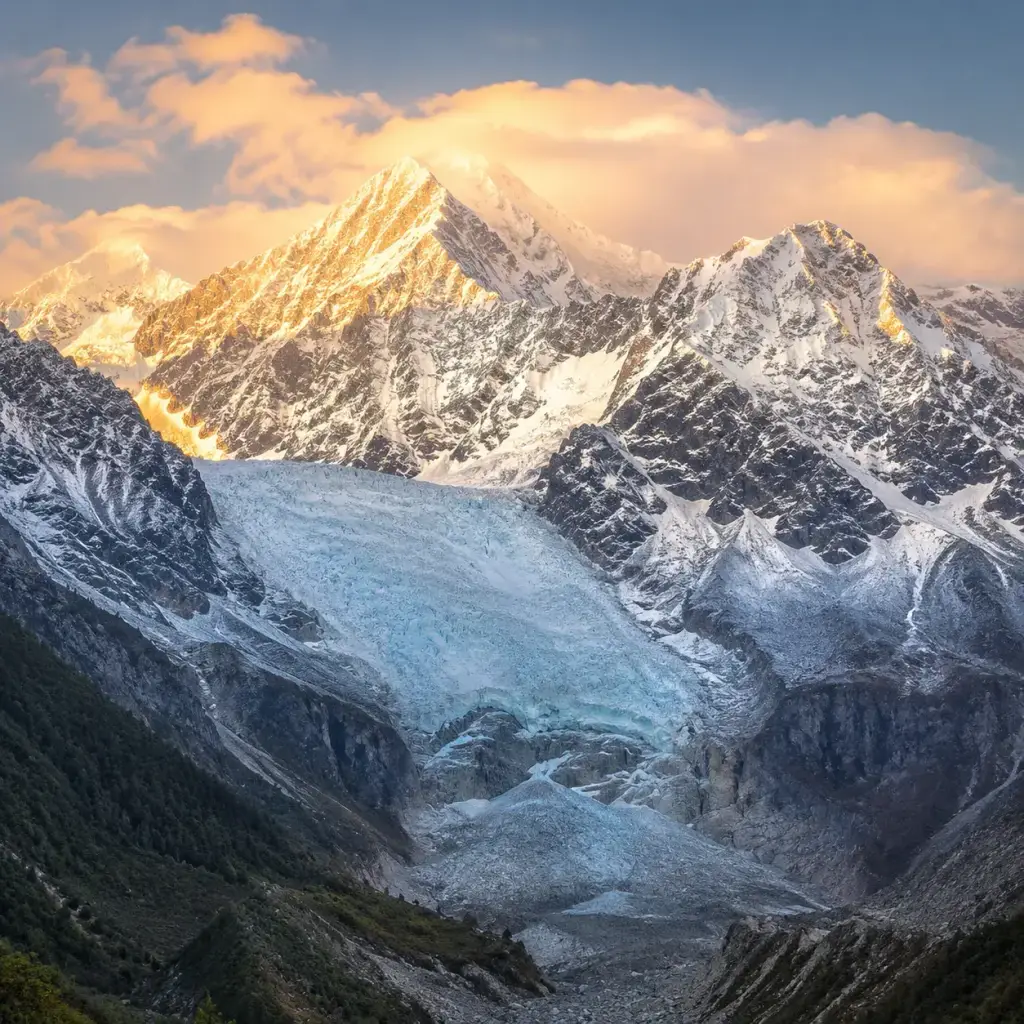
08 Ice fall and snow peaks of Hailuogou Glacier in Sichuan, China

Hailuogou Glacier

A rare low-altitude glacier with a 1,000m ice fall, reached by cable car and paired with natural hot springs.

~CNY 90 + cable car CNY 150

Best for: Glacier fans without altitude legs
Sichuan Nov–Apr
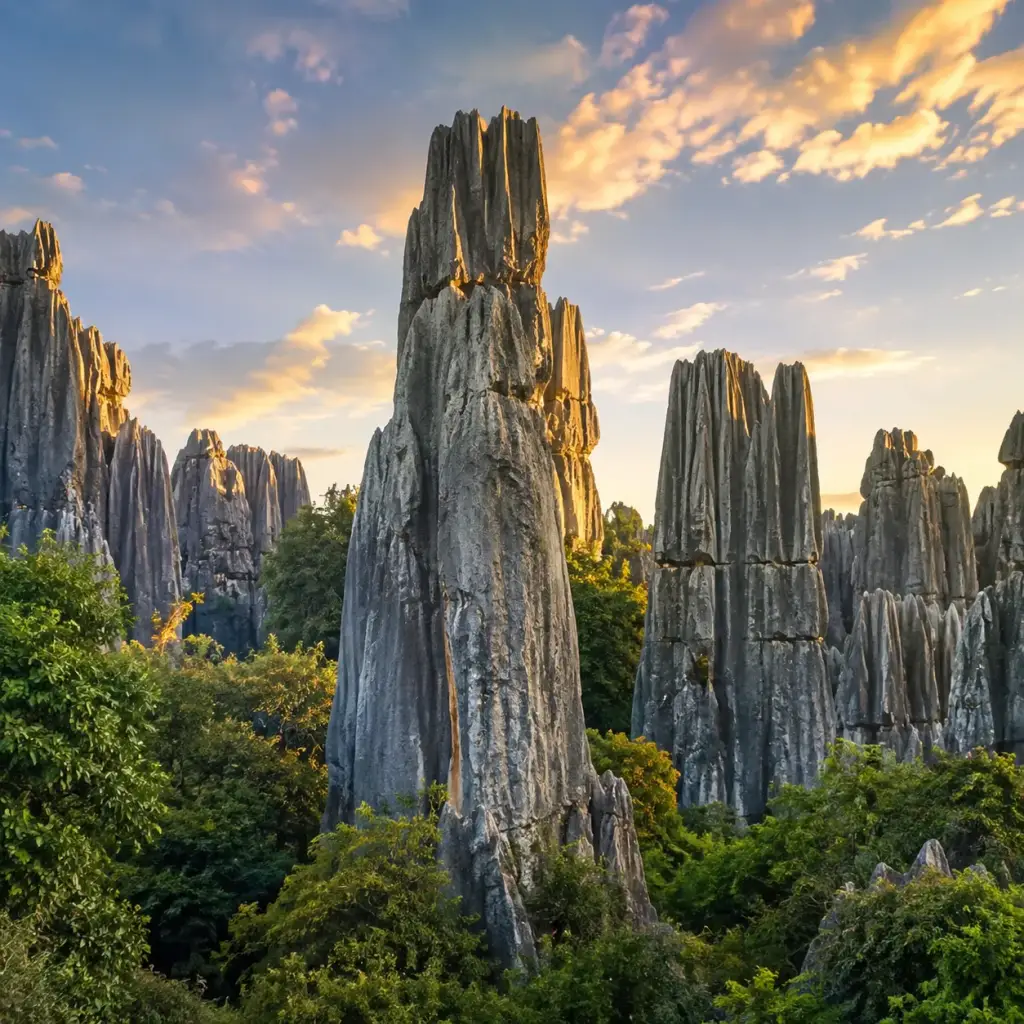
09 Limestone pinnacles of the Yunnan Stone Forest near Kunming, China

Yunnan Stone Forest

A UNESCO-listed forest of 30m limestone pinnacles near Kunming — an easy day trip that feels like another planet.

UNESCO World Heritage ~CNY 130 Full guide

Best for: Day-trippers from Kunming

Yunnan Year-round
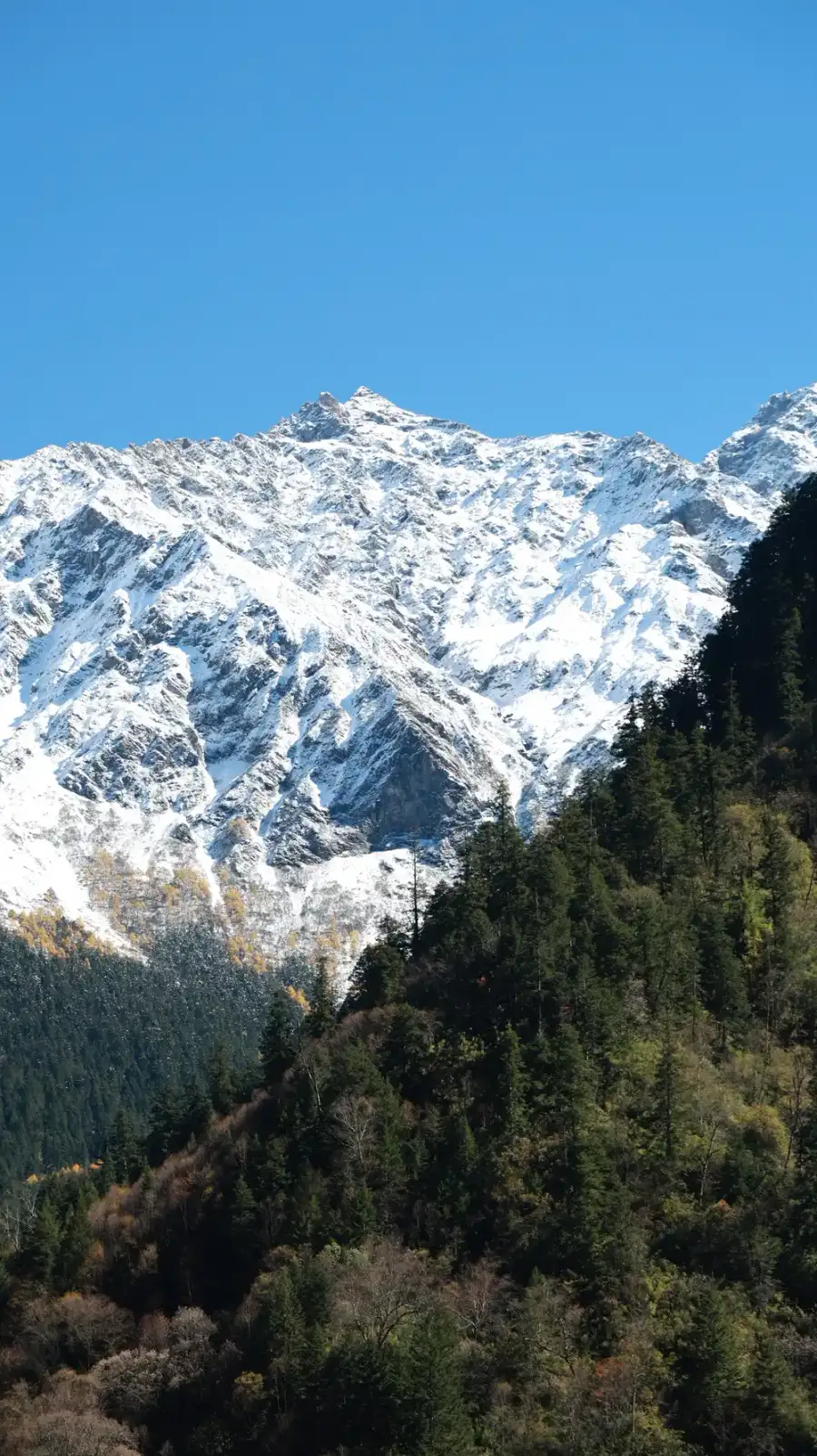
10 Kawagebo peak of Meili Snow Mountain at sunrise in Yunnan, China

Meili Snow Mountain

The sacred 6,740m peak whose 'sunrise on golden mountain' over Kawagebo is one of Tibet's greatest views.

UNESCO World Heritage Full guide

Best for: Sunrise photographers

Yunnan Oct–Mar
Start Here

First time in China for nature?

Start with Guilin & Yangshuo — 3–4 days, no altitude, and the exact landscape you've seen in every photo.

Find My Trip

Only 5 days and it's your first time → Guilin & Yangshuo (no altitude, easy logistics, the postcard scene)

You want drama and don't mind steps → Zhangjiajie (Avatar's floating peaks and a glass bridge)

You're a photographer chasing color → Jiuzhaigou in autumn (turquoise lakes at their peak)

You want snow and glaciers → Hailuogou in winter (a low-altitude glacier plus hot springs)

You love wildlife → Chengdu pandas + Wolong (the closest thing to wild pandas)

You fear altitude but want lakes → Jiuzhaigou over Tibet (same wow factor, far lower risk)

14

World Natural Heritage sites

5

National parks (first batch)

49

National parks by 2035

11,800+

Protected areas

Figures from UNESCO World Heritage Centre and China's National Forestry & Grassland Administration.

The Tool

Find Your Landscape

Filter by landform, season, difficulty and altitude — get a shortlist of destinations that actually fit your trip.

12 destinations

Guilin & Yangshuo

Karst

Iconic karst peaks, bamboo rafts and bike rides through rice fields — the classic China postcard.

Spring / Summer / Autumn 3–4 days Easy Low altitude
Plan this trip

Location: Guangxi, southern China

Cost: Li River cruise ~CNY 360; parks from CNY 60

Getting there: Fly to Guilin (KWL) or high-speed rail from Guangzhou (2.5h)

Tip: Skip the big boats — a Yulong River bamboo raft is quieter and prettier

Read the full guide

Zhangjiajie

Mountains

3,000 sandstone pillars that inspired Avatar, plus the world's tallest outdoor elevator.

Spring / Autumn 3 days Moderate Low altitude
Plan this trip

Location: Hunan, 32km from Zhangjiajie city

Cost: Forest park ~CNY 225 (4-day); elevators extra

Getting there: High-speed rail to Zhangjiajie West, then shuttle to Wulingyuan gate

Tip: Stay in Wulingyuan and enter at opening time to beat elevator queues

Read the full guide

Jiuzhaigou Valley

Lakes

Unreal turquoise lakes, waterfalls and snow peaks in a Tibetan valley — best in autumn color.

Autumn 2–3 days Easy 1,500–3,000m
Plan this trip

Location: Sichuan, 400km north of Chengdu

Cost: ~CNY 169–280; advance reservation required

Getting there: Fly from Chengdu (1h) or bus (8h); book tickets online first

Tip: Go in late October for peak color, enter at 7am, buy tickets days ahead

Huangshan

Mountains

The 'loveliest mountain of China' — granite pines, cloud seas and sunrise above the mist.

Year-round 2–3 days Moderate 1,500–3,000m
Plan this trip

Location: Anhui, 1.5h from Huangshan city

Cost: ~CNY 190 + cable cars ~CNY 80–90

Getting there: High-speed rail to Huangshan North, then bus to the scenic area

Tip: Stay one night on the summit to catch sunrise without the dawn climb

Zhangye Danxia

Danxia

Rainbow-striped hills that look like a painting — most vivid at sunrise and sunset.

Year-round 1–2 days Easy Low altitude
Plan this trip

Location: Gansu, 40km from Zhangye city

Cost: ~CNY 75 + shuttle bus

Getting there: Fly or high-speed rail to Zhangye, then taxi to the park

Tip: Go at sunset; the west gate has shorter lines than the main entrance

Dunhuang & Gobi

Deserts

Singing sand dunes, the Crescent Lake oasis and Mogao Caves on the Silk Road.

Spring / Autumn 3 days Easy Low altitude
Plan this trip

Location: Gansu, far west on the Silk Road

Cost: Mogao Caves from CNY 238 (book ahead); dunes ~CNY 110

Getting there: Fly to Dunhuang from Lanzhou/Xi'an, or overnight train

Tip: Mogao Caves sells out — reserve a week ahead; hit the dunes at dusk

Read the full guide

Hulunbuir Grassland

Grasslands

China's largest prairie — endless green, horse riding and Mongolian yurt stays in summer.

Summer 3 days Easy Low altitude
Plan this trip

Location: Inner Mongolia, on the Russian border

Cost: Grassland access via tour/camp, ~CNY 100–300

Getting there: Fly to Hailar (HLD) from Beijing, then rent a car or join a tour

Tip: Go June–August for green grass; book yurt stays ahead in July

Hailuogou Glacier

Glaciers

A rare low-altitude glacier with an ice fall, hot springs and views of Mount Gongga.

Winter / Spring 2–3 days Moderate 3,000–4,500m
Plan this trip

Location: Sichuan, 300km from Chengdu

Cost: ~CNY 90 + cable car CNY 150

Getting there: Bus from Chengdu (6h) via Luding, or drive

Tip: Winter has the clearest views; book the hot-spring hotel inside the park

Xishuangbanna

Forests

China's only tropical rainforest — wild elephants, tea mountains and Dai culture.

Winter / Spring 3 days Easy Low altitude
Plan this trip

Location: Yunnan, on the Laos border

Cost: Botanical Garden ~CNY 75; Elephant Valley ~CNY 80

Getting there: Fly to Jinghong (JHG) from Kunming or Chongqing

Tip: Come in winter for dry, cool weather; see elephants at morning feeding

Read the full guide

Yellow River Delta

Wetlands

A migratory-bird sanctuary where the Yellow River meets the sea — a red suaeda 'carpet' in autumn.

Autumn / Winter 1–2 days Easy Low altitude
Plan this trip

Location: Shandong, at the Yellow River mouth

Cost: ~CNY 60–90

Getting there: Drive or take a bus from Dongying city

Tip: Autumn (Sep–Nov) brings the red suaeda carpet and peak bird migration

Shangri-La

Plateau

Tibetan plateau at 3,200m — alpine lakes, monasteries and snow-capped gorges.

Spring / Autumn 3–4 days Moderate 3,000–4,500m
Plan this trip

Location: Yunnan, at 3,200m altitude

Cost: Songzanlin Monastery ~CNY 90; Pudacuo Park ~CNY 100

Getting there: Fly to Diqing (DIG) from Kunming/Chengdu, or bus from Lijiang

Tip: Spend the first night acclimatizing; carry layers even in summer

Read the full guide

Tibet & Lhasa

Plateau

The Roof of the World — Potala Palace, turquoise lakes and Himalayan passes.

Summer / Autumn 4–7 days Challenging 4,500m+
Plan this trip

Location: Tibet Autonomous Region, 3,650m altitude

Cost: Potala Palace ~CNY 200 (book ahead)

Getting there: Fly to Lhasa from Chengdu/Xi'an, or the Qinghai–Tibet railway

Tip: Foreign travelers need a Tibet permit via an agency; acclimatize 2 days in Lhasa

Read the full guide
At a Glance

All 12 Destinations, Compared

Seasons, difficulty, altitude and time needed — the full picture in one table, no clicks required.

Destination Landscape Best season Difficulty Altitude Days Entry fee Why go
Guilin & Yangshuo Karst Spring, Summer, Autumn Easy Low 3–4 days Li River cruise ~CNY 360; parks from CNY 60 Iconic karst peaks, bamboo rafts and bike rides through rice fields — the classic China postcard.
Zhangjiajie Mountains Spring, Autumn Moderate Low 3 days Forest park ~CNY 225 (4-day); elevators extra 3,000 sandstone pillars that inspired Avatar, plus the world's tallest outdoor elevator.
Jiuzhaigou Valley Lakes Autumn Easy 1,500–3,000m 2–3 days ~CNY 169–280; advance reservation required Unreal turquoise lakes, waterfalls and snow peaks in a Tibetan valley — best in autumn color.
Huangshan Mountains Year-round Moderate 1,500–3,000m 2–3 days ~CNY 190 + cable cars ~CNY 80–90 The 'loveliest mountain of China' — granite pines, cloud seas and sunrise above the mist.
Zhangye Danxia Danxia Year-round Easy Low 1–2 days ~CNY 75 + shuttle bus Rainbow-striped hills that look like a painting — most vivid at sunrise and sunset.
Dunhuang & Gobi Deserts Spring, Autumn Easy Low 3 days Mogao Caves from CNY 238 (book ahead); dunes ~CNY 110 Singing sand dunes, the Crescent Lake oasis and Mogao Caves on the Silk Road.
Hulunbuir Grassland Grasslands Summer Easy Low 3 days Grassland access via tour/camp, ~CNY 100–300 China's largest prairie — endless green, horse riding and Mongolian yurt stays in summer.
Hailuogou Glacier Glaciers Winter, Spring Moderate 3,000–4,500m 2–3 days ~CNY 90 + cable car CNY 150 A rare low-altitude glacier with an ice fall, hot springs and views of Mount Gongga.
Xishuangbanna Forests Winter, Spring Easy Low 3 days Botanical Garden ~CNY 75; Elephant Valley ~CNY 80 China's only tropical rainforest — wild elephants, tea mountains and Dai culture.
Yellow River Delta Wetlands Autumn, Winter Easy Low 1–2 days ~CNY 60–90 A migratory-bird sanctuary where the Yellow River meets the sea — a red suaeda 'carpet' in autumn.
Shangri-La Plateau Spring, Autumn Moderate 3,000–4,500m 3–4 days Songzanlin Monastery ~CNY 90; Pudacuo Park ~CNY 100 Tibetan plateau at 3,200m — alpine lakes, monasteries and snow-capped gorges.
Tibet & Lhasa Plateau Summer, Autumn Challenging 4,500m+ 4–7 days Potala Palace ~CNY 200 (book ahead) The Roof of the World — Potala Palace, turquoise lakes and Himalayan passes.

Costs and logistics change — check the latest ticket prices before you book. Altitude bands: low = below 1,500m.

Who Are You?

Your Type, Your Trip

Different travelers need different landscapes. Pick your type and go.

First-timer

Pick: Guilin & Yangshuo

The easiest intro to China's nature — no altitude, mature infrastructure, and the landscape you already know from photos.

3–4 days

Photographer

Pick: Jiuzhaigou + Zhangye Danxia

The two most photogenic spots in China — mirror-still turquoise lakes and airbrushed rainbow cliffs.

4–5 days

Hiker

Pick: Huangshan + Tiger Leaping Gorge

Granite summit sunrises and Asia's most famous gorge trail — serious climbs with serious rewards.

4–6 days

Family

Pick: Chengdu pandas + Guilin

Pandas in the morning, bamboo rafts in the afternoon — low effort, high reward for kids.

5–6 days

Wildlife lover

Pick: Sichuan + Qinghai

Pandas in Sichuan, then Tibetan antelope and snow-leopard country on the plateau.

7–10 days

10 Landscapes

Every Landscape China Has

China spans four climate zones and every major landform on Earth. Here's how to make sense of it.

Karst

Tower-like limestone peaks, caves and lazy rivers

Karst peaks of the Li River in Guilin, China

Guilin · Yangshuo · Yunnan Stone Forest

Karst is the landscape you already know — the cone-shaped limestone peaks rising out of jade-green rivers that appear on every Chinese painting and banknote. It forms when mildly acidic rainwater slowly dissolves soluble limestone over millions of years, leaving behind towers, caves and underground rivers.

Guilin & Yangshuo

Apr–Nov

The classic karst scene. Cruise the Li River from Guilin to Yangshuo, then rent a bike and ride through rice paddies, or float a bamboo raft down the Yulong River.

Cruise, cycling, bamboo raft

Full guide

Yunnan Stone Forest

Year-round

A UNESCO-listed forest of jagged limestone pinnacles near Kunming — some 30m tall — threaded with stone paths, caves and Yi minority villages.

Walking trails

Full guide

Wulong Karst

Apr–Oct

Giant natural bridges, sinkholes and caves near Chongqing — an otherworldly backdrop used in films, and one of the largest karst systems on Earth.

Hiking, cave tours

Best way: Boat or raft is the classic way in — but renting a bike in Yangshuo gets you closer and away from the tour buses.

Danxia

Rainbow-striped red cliffs that look painted

Rainbow-striped danxia cliffs of Zhangye in Gansu, China

Zhangye · Danxia Mountain · Langshan

Danxia is China's most photogenic oddity — layered red sandstone carved by erosion into stripes of crimson, orange and cream that look airbrushed. The landform is named after the Danxia Mountains in Guangdong, but the most famous example is Zhangye's 'Rainbow Mountains'.

Zhangye Danxia

Year-round

The Rainbow Mountains — vast ridges of striped red, yellow and green rock in Gansu. Colors are most saturated just after sunrise and before sunset.

Boardwalks, viewpoints

Danxia Mountain

Oct–Dec

The landform's namesake near Shaoguan, Guangdong — red cliffs, stone pillars and subtropical forest, with boat rides along the Jin River below.

Hiking, river boat

Langshan

Apr–Oct

A quieter World Heritage danxia of red peaks and a dramatic river-cut gorge in Hunan, far from the Zhangye crowds.

Hiking

Best way: Visit at golden hour — low sun brings out the strata. Zhangye's boardwalks make it easy, but hiring a driver lets you beat the crowds.

Mountains

Granite spires, cloud seas and sacred summits

Granite peaks of Huangshan (Yellow Mountain) in Anhui, China

Huangshan · Zhangjiajie · Fanjing

China's scenic and sacred mountains are a category of their own — granite spires wreathed in cloud, stone staircases climbing to temples on the summit, and sunrises people wake in the dark to see. Some are pilgrimage sites; others are pure geology.

Huangshan

Year-round

The 'loveliest mountain of China' — granite pines, grotesque rocks, hot springs and a famous sea of clouds. UNESCO-listed and the direct inspiration for classical ink painting.

Cable car + summit trails

Zhangjiajie

Apr–Nov

3,000 quartz-sandstone pillars rising out of subtropical forest — the 'floating mountains' of Avatar. Includes the world's tallest outdoor elevator and a glass-bottomed bridge.

Elevator, glass bridge, trails

Full guide

Fanjingshan

Apr–Nov

A dramatic twin-peaked summit topped by Buddhist temples, reached by a near-vertical staircase above a sea of clouds in Guizhou.

Staircase hike

Best way: Plan at least one summit sunrise — it is the single best mountain experience in China. Cable cars save your legs, but queues are long in peak season.

Lakes

Turquoise alpine lakes and crystal-clear pools

Napa Lake wetland meadow near Shangri-La in Yunnan, China

Jiuzhaigou · Qinghai Lake · Kanas

China's alpine lakes are unlike anything at sea level — turquoise, emerald and sapphire pools formed by glacial runoff and mineral deposits, often framed by snow peaks. They are the country's most photographed water.

Jiuzhaigou

Sep–Oct

A UNESCO valley of over 100 tiered lakes and waterfalls in every shade of blue and green, backed by snow mountains and Tibetan villages.

Boardwalk + shuttle bus

Qinghai Lake

Jun–Aug

China's largest lake — a vast saltwater mirror ringed by yellow rapeseed fields in summer, and a key stop on the Qinghai–Tibet route.

Cycling, driving loop

Kanas

Sep–Oct

An emerald mountain lake in the far-northwest Altai, famous for autumn birch and larch forests and the mythical 'Kanas monster'.

Boat, boardwalks, viewpoints

Best way: Go in autumn for maximum color, and arrive at opening time — alpine lakes are calmest and most reflective before the wind picks up.

Deserts

Singing dunes, oases and Silk Road silence

Crescent Lake oasis in the Mingsha dunes of Dunhuang, China

Dunhuang · Badain Jaran · Taklimakan

China's deserts are the sands of the ancient Silk Road — rolling dune fields, 'singing' sands, oasis lakes and the ruins of caravan towns. They stretch across the northwest from Gansu to Xinjiang.

Dunhuang & Mingsha Shan

Apr–Jun, Sep–Oct

The 'Singing Sand Dunes' rising behind a crescent-shaped oasis lake, gateway to the Mogao Caves' thousand-year-old Buddhist art.

Camel ride, sandboarding, sunset

Full guide

Badain Jaran

May–Oct

The world's tallest stationary dunes — some 500m — hiding over 100 spring-fed lakes in Inner Mongolia, sacred to local herders.

4WD desert tour

Taklimakan

Apr–Oct

One of Earth's largest sandy deserts, crossed by a remote desert highway — a vast, empty sea of dunes in Xinjiang.

Desert highway drive

Best way: Go at dawn or dusk when the sand glows and temperatures drop — and always take a licensed driver into the dunes.

Grasslands

Endless steppe, galloping horses and yurts

Highland grassland of Shangri-La in Yunnan, China

Hulunbuir · Zoige · Bayanbulak

China's northern steppe is where the country turns green and endless — rolling grassland dotted with grazing sheep, galloping horses and white Mongolian yurts, under skies that seem to go on forever.

Hulunbuir

Jun–Aug

China's largest and lushest prairie in Inner Mongolia, along the Russian border — rivers, birch forests and horse-riding camps.

Horse riding, yurt stays

Zoige

Jun–Aug

A high-altitude 'jade' grassland on the Sichuan–Gansu border, dotted with wildflowers, yaks and the first bend of the Yellow River.

Scenic drives, horse riding

Bayanbulak

Jun–Sep

A vast alpine meadow in Xinjiang famous for its 'Nine Bends' river viewpoint at sunset and its wild swans.

Sunset viewpoints

Best way: Go in summer (June–August) when the grass is greenest, and stay overnight in a yurt to catch a star-filled sky.

Glaciers

Ice falls, snow peaks and thermal springs

Glacier and snow peaks of Hailuogou in Sichuan, China

Hailuogou · Rongbuk · Meili Snow

China's glaciers are the frozen spine of its highest ranges — blue ice falls tumbling between peaks and snow mountains that mark the Roof of the World. Several are accessible at unusually low altitude.

Hailuogou

Nov–Apr

A rare low-altitude glacier in Sichuan with a 1,000m ice fall, reached by cable car and paired with natural hot springs.

Cable car, hot springs

Rongbuk Glacier

Apr–Jun, Sep–Oct

The glacier below Everest's north face in Tibet — the closest most travelers ever get to the world's highest peak.

Base-camp road

Meili Snow Mountain

Oct–Mar

A sacred 6,740m peak range in Yunnan known for the 'sunrise on golden mountain' effect over Kawagebo.

Viewpoints

Best way: Winter and early spring give the clearest glacier views — summer clouds often hide the peaks.

Forests

Ancient woodlands, bamboo seas and rainforest

Tropical rainforest of Xishuangbanna in Yunnan, China

Shennongjia · Xishuangbanna · Shunan

China's forests range from the misty primeval woodlands of the center to the last tropical rainforest in the south — refuges for pandas, golden monkeys and wild elephants.

Shennongjia

May–Oct

A mysterious UNESCO-listed primeval forest in Hubei — deep canyons, cloud forest and the golden snub-nosed monkey.

Trails, monkey viewing

Xishuangbanna

Nov–Apr

China's only tropical rainforest in southern Yunnan — wild Asian elephants, tea mountains and Dai culture.

Botanical gardens, elephant valley

Full guide

Shunan Bamboo Sea

Year-round

A 120 km² ocean of emerald bamboo in Sichuan, crisscrossed by quiet paths, waterfalls and a lake to boat across.

Walking, boating

Best way: Visit Shennongjia in autumn for mist and color; Xishuangbanna in winter for dry, cool jungle weather.

Wetlands

Bird sanctuaries, marshes and river deltas

Wetland lakes of Pudacuo National Park in Shangri-La, China

Yellow River Delta · Zoige Marshes

China's wetlands are the meeting of water and land — river deltas, marshes and reed beds that rank among the world's most important stopovers for migratory birds.

Yellow River Delta

Sep–Nov

Where the Yellow River empties into the Bohai Sea — a UNESCO-listed sanctuary for migratory birds, and a 'red carpet' of suaeda plants each autumn.

Boardwalks, birdwatching

Zoige Marshes

Jun–Aug

High-altitude peat bogs on the Tibetan plateau — the source of the Yellow River and home to black-necked cranes.

Birdwatching

Yancheng

Nov–Feb

Coastal wetlands in Jiangsu protecting the red-crowned crane and the endangered milu deer.

Crane viewing

Best way: Bring binoculars and go in migration season — autumn (Sep–Nov) is peak for birds and the red suaeda carpet.

Plateau

The Roof of the World — high plains and peaks

Tibetan plateau landscape with snow mountains, China

Tibet · Shangri-La · Hoh Xil

The Tibetan Plateau — the 'Roof of the World' — is a world apart: high plains at 4,000m, turquoise sacred lakes, glacier-topped ranges and monasteries clinging to cliffs. Altitude is part of the experience.

Lhasa & Tibet

May–Oct

The plateau's cultural heart — Potala Palace, Jokhang Temple, and the turquoise lakes and passes of the high Himalaya.

Sightseeing, overland drives

Full guide

Shangri-La

Apr–Nov

A Tibetan town at 3,200m in Yunnan — Songzanlin Monastery, alpine lakes and snow-capped gorges of the Meili range.

Monastery visits, hiking

Full guide

Hoh Xil

Jun–Sep

A vast, empty UNESCO wilderness in Qinghai — home to the Tibetan antelope and one of the wildest places left in China.

Overland traverse

Best way: Acclimatize first (one night at ~3,000m), go May–October to avoid snow, and carry a warm layer even in summer.

The Big Three

Zhangjiajie vs Guilin vs Jiuzhaigou

The question everyone asks. Here's the honest answer.

ZhangjiajieGuilin & YangshuoJiuzhaigou
Landscape Sandstone pillar forestKarst peaks & riversAlpine lakes & waterfalls
Best season Apr–OctApr–NovSep–Oct
Difficulty ModerateEasyEasy
Altitude LowLow~2,000–3,000m
Days needed 3 days3–4 days2–3 days
Best for Adventure & dramaEasy scenery & cyclingPhotography & color
Verdict Pick for wow-factor peaksPick for first-timersPick for unreal lakes
More comparisons

Guilin vs Yunnan

Guilin is one compact region — perfect for a 3–4 day trip. Yunnan is a whole province — expect a week or more and bigger distances. Pick Guilin for ease; Yunnan for variety (Stone Forest, rice terraces, Shangri-La).

Jiuzhaigou vs Huanglong

Both are Sichuan valleys, often combined in one trip. Jiuzhaigou is bigger, bluer and more famous; Huanglong is a smaller travertine terrace with a gentler walk. Do both in 3 days from Chengdu.

Huangshan vs Zhangjiajie

Huangshan is classic granite scenery — pines, cloud seas and a famous sunrise. Zhangjiajie is alien sandstone pillars and adventure attractions. Pick Huangshan for atmosphere, Zhangjiajie for drama.

Timing

When to Go

Spring and autumn are the sweet spots — but every season has a landscape.

Spring

Mar–May

Mild temperatures and blooming flowers make spring the safest all-round choice. Karst turns lush green and mountain paths reopen after winter. Watch for May public holidays, which spike domestic travel.

Karst, mountains, flowers

Summer

Jun–Aug

Hot and humid in the south (30°C+), but the grasslands and high plateau hit their prime — cool, green and full of wildflowers. Rivers run high for rafting. Expect afternoon storms.

Grasslands, plateau, rivers

Autumn

Sep–Nov

The golden season — crisp air and the year's best light. Lakes go mirror-still, forests turn red and gold, and danxia colors peak. Avoid the first week of October (Golden Week), when prices triple.

Lakes, forests, danxia

Winter

Dec–Feb

Snow, hot springs and empty viewpoints. Hotels are cheap and crowds vanish — but the north is bitterly cold and some high passes close. Best for snow scenery, glaciers and misty karst.

Snow, hot springs, ice

Month-by-month guide

Jan

Ice festivals in Harbin; misty karst in Guilin

Feb

Snow on Huangshan; quiet, cheap and cold

Mar

Spring blooms; karst turns green

Apr

Peak season begins — mild and clear

May

Green mountains; avoid May public holidays

Jun

Grasslands hit their prime; south gets hot

Jul

Plateau and grasslands; monsoon in the south

Aug

Hulunbuir and Qinghai at their best

Sep

Autumn begins; lakes and forests turn gold

Oct

Peak color — but skip Oct 1–7 Golden Week

Nov

Danxia and lakes at peak; fewer crowds

Dec

Snow, glaciers and hot springs; cheapest flights

What to Wear

Pack for the Landscape, Not the City

China's nature spans four climate zones. What keeps you comfortable in Dunhuang is useless in Jiuzhaigou — here's the quick map.

High plateau — Tibet, Shangri-La, Jiuzhaigou

Cold mornings, fierce sun, possible snow even in summer

Thermal base layer, fleece or down jacket, windproof shell, wide-brim hat, UV sunglasses, SPF 50 sunscreen, lip balm, altitude medication

Desert & Gobi — Dunhuang, Badain Jaran

Hot days, near-freezing nights, sand gets everywhere

Loose long sleeves, a light scarf or neck gaiter, closed shoes (not sandals), sunglasses, sunscreen, lip balm

Subtropical south — Guilin, Zhangjiajie, Xishuangbanna

Hot and humid, sudden downpours

Quick-dry shirts, a light rain jacket or poncho, breathable trousers, mosquito repellent, anti-chafe socks

Northern grassland — Hulunbuir

Warm days, cold nights even in July

Layers, a warm fleece for evenings, long trousers against insects and horse saddles, sturdy shoes

The 10-item packing checklist
Broken-in walking shoes — you will climb thousands of steps
Layers — mountain mornings are cold even in summer
Light rain jacket or poncho
Sunscreen, hat and sunglasses
Power bank — you navigate and pay by phone
Passport plus printed visa and hotel copies
Regular medication and altitude meds if going above 3,000m
Cash backup — small notes for rural areas
Travel eSIM or roaming plan, set up before you fly
Reusable water bottle
Wildlife

The Animals You Came For

Pandas are the headline — but China hides snow leopards, monkeys and cranes too.

Giant panda eating bamboo at Dujiangyan Panda Base in Sichuan, China

Giant Panda

Sichuan — Wolong & Chengdu bases

~1,800 left in the wild

See pandas at the Chengdu Panda Base (easy day trip) or the less-crowded Dujiangyan base. Go at 8–10am when pandas are most active and feeding. For a near-wild experience, Wolong Nature Reserve's forested enclosures are the closest thing.

See pandas up close
S

Snow Leopard

Tibet & Qinghai plateau

The ghost of the mountains

Almost impossible to see in the wild — your best odds are winter wildlife-watching trips in Qinghai's Sanjiangyuan region, with local trackers, spotting scopes and a lot of patience.
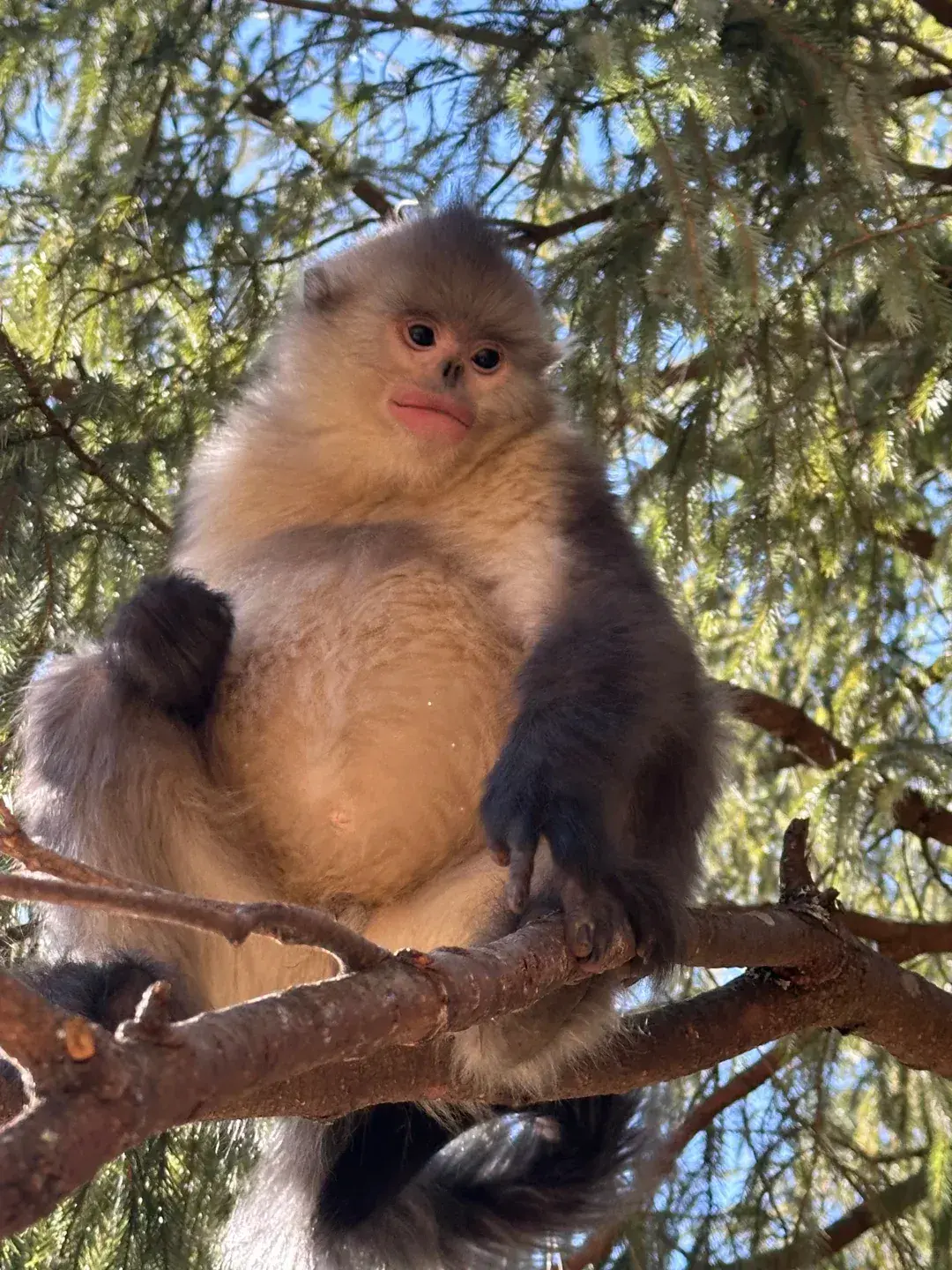
Golden snub-nosed monkey perched in a forest in China

Golden Snub-nosed Monkey

Sichuan, Shaanxi & Hubei

Blue-faced mountain acrobats

Easily seen in Shennongjia (Hubei) and the Qinling Mountains — blue-faced monkeys with golden fur that come close to winter feeding stations.

T

Tibetan Antelope

Hoh Xil, Qinghai

Saved from near-extinction

Spot herds grazing along the Qinghai–Tibet railway and highway through Hoh Xil, especially in the summer calving season (June–July).

C

Red-crowned Crane

NE China wetlands

Symbol of luck & longevity

Winter (Nov–Feb) is peak viewing at Yancheng and Zhalong reserves, where cranes gather in the hundreds — arrive at dawn to see their courtship dances.

T

Siberian Tiger

NE China — Hunchun

Fewer than 60 in the wild

The rarest sight of all. Your best bet is the Hunchun Tiger–Leopard National Park in Jilin, or the breeding centers near Harbin.

What to Eat

The Food at the Foot of the Mountain

Each landscape region has its own kitchen. Here's what to order where — and how to eat well without speaking Chinese.

Guilin & Yangshuo (Guangxi)

Guilin rice noodles, beer fish, stuffed snails, bamboo-tube rice

Eat rice noodles for breakfast like locals — a bowl is CNY 5–10. Beer fish is the Li River classic, best around Yangshuo's West Street.

Zhangjiajie (Hunan)

Sanxiaguo hotpot, Tujia smoked bacon, blood tofu

Hunan food is spicy — say 'bù là' (not spicy) if needed. Sanxiaguo, a sizzling hotpot of cured meats, is the must-try.

Chengdu & Jiuzhaigou (Sichuan)

Hotpot, mapo tofu, dan dan noodles; Tibetan yak dishes in Jiuzhaigou

In Jiuzhaigou, meals are mostly at your hotel or Tibetan family restaurants — simpler and pricier than Chengdu's famous cheap eats.

Dunhuang (Gansu)

Donkey-meat yellow noodles, lamb soup, Lanzhou beef noodles

Silk Road flavours — lamb and noodles dominate. The Shazhou night market is where to eat after the dunes.

Yunnan — Xishuangbanna, Shangri-La, Kunming

Crossing-the-bridge noodles, Dai-style grilled fish, pineapple rice, yak butter tea

China's most diverse food province — Dai food in the tropical south, Tibetan food in the northern mountains.

Tibet — Lhasa

Tsampa (roasted barley), yak momo dumplings, sweet tea, yak butter tea

Tibetan food is hearty and high-calorie — ideal at altitude. Sweet tea houses are the local social hub.

Inner Mongolia — Hulunbuir

Hand-grabbed mutton, milk tea, dairy snacks, roasted whole lamb

Eat like a herder — mutton, dairy and tea. Yurt camps usually cook for guests, so meals are often included.

Dietary restrictions

Vegetarian: say 'wǒ chī sù' (I eat vegetarian). Halal food is widely available in the northwest (Gansu, Xinjiang). Print a card with your allergies in Chinese characters.

Ordering without Chinese

Point at photos on the menu, use a translation app's camera, or ask for the English menu at tourist restaurants. Most picture menus are self-explanatory.

Street-food safety

Stick to busy stalls with high turnover. Bottled water is cheap everywhere; do not drink tap water.

Tipping

Tipping is not expected anywhere in China — not in restaurants, taxis or hotels. Round up a taxi fare at most.

Routes

Three Ways to Do It

Copy-paste itineraries — ready-made routes that combine regions sensibly.

1

5 days

Classic South

Guilin → Yangshuo → Zhangjiajie

Karst + pillar peaks. Easy to moderate, low altitude.

2

7 days

West & Plateau

Chengdu → Jiuzhaigou → Lhasa

Lakes, pandas and the Roof of the World. Allow acclimatization.

3

10 days

North & Wild

Beijing → Dunhuang → Hulunbuir

Desert, Silk Road and endless steppe. Best in summer–autumn.

Costs

What It Costs

Realistic per-person daily budgets in USD, excluding international flights.

Style Accommodation Daily cost 7-day trip
Budget Hostels, local food $30–50 $250–400
Mid-range 3-star hotels, restaurants $60–120 $500–900
Comfort 4–5 star, private car $150–250+ $1,200–2,000+
Where to Stay

Sleep at the Gate, Not in the City

For most parks, the single biggest upgrade is staying next to the entrance — it buys you an empty park at sunrise. Here's where to book for each.

Guilin & Yangshuo

Yangshuo town or a riverside village on the Yulong River

Guilin city is the transport hub, but Yangshuo is where the scenery is — wake up to karst peaks. Riverside guesthouses just outside town are quieter than West Street.

Guesthouses CNY 150–400; riverside boutique CNY 400–800

Zhangjiajie

Wulingyuan town, by the park's east gate

Staying in Zhangjiajie city adds a 40-minute shuttle each way. Wulingyuan puts you at the gate for an early start and shorter elevator queues.

Hotels CNY 200–600

Jiuzhaigou

Zhangzha town, at the park entrance

There is no lodging inside the park itself. Zhangzha village is a short walk from the gate — book early in autumn, it sells out.

Hotels CNY 250–800 (pricier in October)

Huangshan

One night on the summit (Beihai or Paiyunlou hotel)

The famous sunrise is only practical if you sleep on top. Summit hotels are small and sell out weeks ahead.

Summit CNY 900–1,500; base town CNY 150–300

Dunhuang

Shazhou town centre

Compact and walkable, next to the night market and a short taxi from the dunes and the Mogao booking office.

Hotels CNY 150–400

Shangri-La & Tibet

Shangri-La old town or Lhasa's Barkhor area

Stay central for acclimatization — you will want to walk less on day one. Ask for a room with oxygen supply at high-altitude hotels.

CNY 200–600; Lhasa mid-range CNY 300–700

Which platform

Trip.com and Ctrip have the best English interface and accept foreign cards. Booking.com and Agoda also work. For guesthouses and homestays, Trip.com has the widest rural coverage.

Passport registration

Every hotel legally registers your passport at check-in — this is normal and required. Have your physical passport (not a copy) ready.

Peak-season booking

Book 1–2 months ahead for October (Golden Week), Chinese New Year and July–August. Jiuzhaigou and Huangshan summit hotels sell out earliest.

Altitude choice

Above 3,000m, pick a hotel with an elevator and oxygen, and sleep low on night one — stay in Chengdu or Kunming before going straight to Lhasa.

Getting Around

How to Actually Move Around China

The distances are big, but the network is excellent. Match the mode to the journey and it becomes easy.

High-speed rail

Best for: Most journeys between cities

Fastest, cheapest, most reliable. Guilin, Zhangjiajie, Huangshan and Chengdu all have stations. Book on Trip.com or 12306 up to 15 days ahead; seats release at about 8am Beijing time.

Book 15 days out in peak season — popular routes sell out.

Domestic flights

Best for: Remote parks — Jiuzhaigou, Shangri-La, Kanas

Often cheaper than expected and the only sane way to reach far-flung destinations. Fly from the Chengdu, Kunming or Xi'an hubs.

Allow buffer time — mountain airports can be fogged in.

Private car with driver

Best for: Dunhuang, grasslands, multi-stop loops

Hiring a car with driver (CNY 500–900/day) is the easiest way to cover spread-out scenery. Book through your hotel or a licensed agency; self-driving requires a Chinese licence.

Agree the full route and price in writing before setting off.

Buses & park shuttles

Best for: Inside parks and last-mile links

Every big park has mandatory shuttle buses (Jiuzhaigou, Zhangjiajie). Long-distance coaches connect small towns cheaply but slowly.

Park shuttles are usually included in, or added to, your ticket.

Buying train tickets

Trip.com (English) or the official 12306 app (Chinese). Tickets go on sale 15 days ahead at 8am Beijing time. Scan your passport directly at station e-gates.

Ride-hailing & taxis

Didi is China's Uber — set it up with a foreign card before you fly. Taxis are cheap but drivers rarely speak English; show the address in Chinese characters.

Navigation apps

Google Maps is unreliable inside China. Use Apple Maps (works well), Amap/Gaode or Baidu Maps, and download offline maps before you go.

Inside the parks

Buy shuttle + cable-car combos — distances are huge. Arrive at opening time (6–7am) to beat queues, and note the last shuttle time so you don't get stranded.

Before You Fly

The Practical Stuff

Four things that stress people out — solved.

Visa

Around 40 countries get 30-day visa-free entry (the UK and Canada are in a 2026 trial); 57 qualify for 240-hour (10-day) visa-free transit — the US included. Otherwise an L visa costs $140 for 10-year multiple entry. Verify the latest list for your passport before booking.

Tickets

Jiuzhaigou requires online reservation with a daily visitor cap — book days ahead. Zhangjiajie and Huangshan sell out in peak season. Most tickets are digital QR codes linked to your passport.

Altitude

Above 3,000m, ascend gradually and acclimatize 1–2 nights before going higher. Hydrate, skip alcohol, and descend if headaches or breathlessness worsen.

Money & Payments

Alipay and WeChat Pay are everywhere; add an international card before you fly. Keep cash (small notes) as backup for rural areas, and tell your bank you're traveling.

Plan It

Plan Your Trip in 6 Steps

The order matters — book the scarce things first and everything else falls into place.

  1. 1

    Pick your season

    Spring (Mar–May) and autumn (Sep–Nov) suit most of China. Choose your window, then work backwards.

  2. 2

    Choose 1–2 regions

    Don't try to see everything. Pick one landscape (e.g. karst) or one region (e.g. Sichuan), and anchor your trip there.

  3. 3

    Lock the big tickets first

    Book national-park tickets, summit hotels and any flights before anything else — they sell out first.

  4. 4

    Book trains and hotels

    Trains open 15 days ahead at 8am Beijing time. Book hotels next to the park gate for early starts.

  5. 5

    Sort your visa and phone

    Check visa / visa-free status, set up Alipay & WeChat Pay, buy a travel eSIM and install a VPN before you fly.

  6. 6

    Pack for the landscape

    Layers, walking shoes, rain jacket, sunscreen and a power bank cover 90% of scenarios.

Don't Do This

10 Mistakes That Cost Travelers a Day

Learn from the people who got it wrong, so you don't.

Underestimating distances

China is the size of a continent. Zhangjiajie and Guilin are 600km apart — don't try to 'pop over'. Plan half a day of travel between any two stops.

Going during Golden Week (Oct 1–7)

The entire country travels at once. Parks hit capacity, prices triple and viewpoints are shoulder-to-shoulder. Shift your trip by one week and it all disappears.

Not booking tickets in advance

Jiuzhaigou caps daily visitors and sells out; Huangshan summit hotels and Mogao Caves slots go weeks ahead. Book the moment your dates are fixed.

Rushing altitude

Flying straight from sea level to Lhasa is how people ruin their trip. Acclimatize 1–2 nights in Chengdu, Kunming or Xining first, and take it slow on day one above 3,000m.

Packing only for heat

Even in summer, mountain mornings and desert nights are cold. Layers beat a single heavy coat, and a rain jacket is non-negotiable in the south.

Skipping the eSIM / VPN setup

Google, WhatsApp and Instagram are blocked inside China. Set up a travel eSIM or roaming plan and any VPN before you fly — not at the airport.

Trusting the first 'official' ticket seller

Touts outside stations and parks sell overpriced or fake tickets. Buy from the official app, your hotel, or the park's own ticket office.

Eating at the attraction entrance

Food right at the gate is the worst value. Walk 10 minutes into town or ask your hotel where locals eat — same dish, half the price.

Arriving late to the park

Cable-car and shuttle queues peak from 10am. Arrive at opening (6–7am) and you'll have the viewpoint nearly to yourself for an hour.

Forgetting your passport

Parks, trains and hotels all require your physical passport. A photo or copy is usually not enough — carry the real thing every day.

Photography

Get the Shot You Came For

Six frames worth crossing the world for — and how to nail each one.

Zhangye Danxia

Shoot at golden hour — the striped cliffs look flat under midday sun. The west gate has shorter lines; viewpoint No.4 is the classic frame.

Jiuzhaigou

Go in late October, enter at 7am, and head to Five-Flower Lake before the wind picks up — still water gives the mirror reflection.

Huangshan

Stay on the summit and shoot the cloud sea at dawn. A polarizer cuts glare off the granite and deepens the sky.

Guilin & Yangshuo

The classic shot is from Xianggong Hill at sunrise, looking down the Li River bend. On the river, shoot from the front of the raft.

Dunhuang

Climb the dunes for sunset over Crescent Lake; a telephoto compresses the dune ridges. Protect your camera from sand — it gets everywhere.

Tibet & Shangri-La

The 'golden mountain' sunrise on Meili Snow Mountain is a once-in-a-lifetime frame — go Oct–Mar for clear skies. Ask before photographing monks.

Quick Answers

Frequently Asked Questions

? What is the best nature destination in China for first-time visitors?

Guilin and Yangshuo. They combine the two things first-timers want most — iconic scenery and easy logistics. The karst peaks are the landscape you already know from Chinese paintings, the infrastructure is mature (airport, high-speed rail, English-friendly guesthouses), and you can experience it by bamboo raft, bike or on foot with almost no fitness required. Spend 3–4 days, and pair it with Zhangjiajie or a city like Beijing or Shanghai. Jiuzhaigou is more beautiful but harder to reach and altitude is a factor. Zhangjiajie is more dramatic but involves more climbing and queues.

? Guilin, Zhangjiajie or Jiuzhaigou — which one should I choose?

Pick by what you value most. Guilin/Yangshuo is the easiest and most relaxing — river cruises, cycling, rice terraces. Zhangjiajie is for drama and adventure — the floating Avatar peaks, glass bridges and cliff walks. Jiuzhaigou is for pure photographic wow — unreal turquoise lakes and waterfalls, but it is remote, seasonal and altitude-affected. If you can only do one: Guilin for ease, Zhangjiajie for spectacle, Jiuzhaigou for color. If you have 10+ days, you can do two of them back-to-back by high-speed rail or a short flight.

? How many days do I need for a nature trip in China?

Most single destinations need 2–3 days on the ground. Guilin and Yangshuo: 3–4 days. Zhangjiajie: 3 days. Jiuzhaigou: 2–3 days (plus travel). Huangshan: 2 days. For a multi-stop nature route, budget 5–10 days. China is large, so build in half a day of travel between stops. A realistic 'best of China nature' first trip is 7–10 days covering two regions — for example Guilin + Zhangjiajie, or Chengdu (pandas) + Jiuzhaigou.

? What is the best time of year to visit China for nature?

Spring (March–May) and autumn (September–November) are the sweet spots across most of China — mild temperatures, clear skies and the best colors. Autumn (late September to October) is the single best window for lakes and forests, but avoid the first week of October (Golden Week), when everything is packed and prices triple. Summer suits the grasslands and high plateau. Winter is quiet, cheap and misty — great for snow scenery and hot springs but not for lush green landscapes.

? Do I need a visa to visit China?

Not necessarily. China currently grants 30-day visa-free entry to citizens of around 40 countries — the UK and Canada were added in 2026 on a trial basis — and roughly 29 more are covered by mutual visa-exemption agreements. A separate 240-hour (10-day) visa-free transit policy applies to travelers from 57 countries (including the US) entering at 65 ports across 24 provinces — Guilin and Nanning are on the list. US citizens flying on to a third country can use the transit option; otherwise they need a tourist (L) visa, $140 for a 10-year multiple-entry. The lists change frequently, so always verify the latest rules for your passport on the official Chinese embassy site before booking, and apply 4–6 weeks ahead if a visa is required.

? What is the most underrated natural wonder in China?

Hailuogou Glacier in Sichuan. Everyone chases Zhangjiajie and Jiuzhaigou, but at Hailuogou you stand at the foot of a 1,000m ice fall without ever going above 3,000m — then soak in natural hot springs while looking up at Mount Gongga (7,556m), the highest peak of Sichuan. A close second is the Yunnan Stone Forest: a UNESCO site that feels like another planet, yet most visitors to Kunming never make the easy day trip. Zhangye Danxia at sunset also deserves more credit than its photos suggest.

? Can I see giant pandas in the wild?

Seeing a panda in the true wild is extremely rare — even researchers rarely spot them. What travelers actually do is visit panda bases and reserves, where pandas live in large, semi-natural forest enclosures. The best are Chengdu's Panda Base (easy, day trip) and the Dujiangyan Panda Base (volunteer programs, less crowded). Wolong Nature Reserve in Sichuan offers the closest thing to 'wild' viewing with forested mountain enclosures. Go in the early morning (8–10am) when pandas are most active and feeding.

? Is it safe to hike in China's national parks?

Yes, on maintained trails. China's major parks — Huangshan, Zhangjiajie, Jiuzhaigou — have boardwalks, stone steps, railings and clear signage. The risks are the same as hiking anywhere: slippery steps after rain, altitude on high routes, and underestimating distances. Stay on marked paths, wear proper shoes, carry water, and avoid off-trail scrambling on remote peaks without a guide. For remote treks (Tiger Leaping Gorge, Hailuogou, Meili Snow Mountain), go with a licensed guide or join a group.

? How do I deal with altitude sickness on the Tibetan plateau?

Ascend gradually and give your body time. Fly to a mid-altitude city (Chengdu or Kunming) and acclimatize before going higher. Once above ~3,000m: take it easy for the first 24–48 hours, avoid alcohol and heavy meals, drink plenty of water, and sleep at the lowest altitude you can manage. Over-the-counter acetazolamide (Diamox) helps many travelers when started a day before ascent. If symptoms worsen (severe headache, vomiting, breathlessness), descend — that is the only real cure. Consult a doctor before any high-altitude trip.

? Do I need to book national park tickets in advance?

Yes, for the big ones. Jiuzhaigou strictly requires online reservation with a daily visitor cap — buy tickets on the official app or via a hotel days ahead, especially in autumn. Zhangjiajie and Huangshan tickets can often be bought at the gate but sell out in peak season. Golden Week (Oct 1–7) and summer weekends require booking everything in advance. Note that Chinese parks often require passport registration at purchase, and most tickets are now digital QR codes linked to your passport or a Chinese phone app.

? How do I get between nature destinations in China?

China's high-speed rail network is the fastest, cheapest and most reliable way to connect destinations. Guilin, Zhangjiajie, Huangshan and Chengdu all have high-speed stations with frequent trains to major cities. Remote areas (Jiuzhaigou, Shangri-La, Kanas) are reached by domestic flights from Chengdu, Kunming or Xi'an. Trains bookable 15 days ahead on Trip.com or the official 12306 app; flights are often cheaper than you expect. Allow half a day for any transfer, and note that many stations are outside the city center.

? What should I pack for a China nature trip?

Broken-in walking shoes are non-negotiable — you will climb thousands of steps. Add: layers (mountain mornings are cold even in summer), a light rain jacket, sunscreen and a hat, a power bank (you will navigate and pay by phone), passport and printed visa/hotel copies, any regular medication, and cash as backup (small notes for rural areas). If going above 3,000m, pack a warm layer and altitude medication. Leave room in your bag — you will buy tea, snacks and souvenirs.

? Is China safe for solo nature travelers?

China is one of the safest countries for solo travelers — violent crime against tourists is extremely rare, and solo women generally report feeling safe even at night. The real challenges are practical, not safety-related: the language barrier, paying without a Chinese bank card, and navigating apps that require a local number. In remote areas, tell your accommodation your route and expected return time before setting out. Common sense — the same you would use anywhere — is all you need.

? Can I use Google Maps and WhatsApp in China?

Google Maps and WhatsApp do not work on Chinese networks without a VPN, and many VPNs are unreliable inside China. The practical fix most travelers use: a travel eSIM from Hong Kong or a roaming data plan, which usually routes around the block and lets Google/WhatsApp/Instagram work normally. For maps, download Amap or Baidu Maps (English support is limited) or use Apple Maps, which works reasonably in China. Set up Alipay/WeChat Pay and download any VPN before you fly.

? How much does a nature trip in China cost?

China offers excellent value. A comfortable mid-range nature trip runs about $60–120 per person per day, including a private room, meals, park tickets and transport. Budget travelers can do $30–50/day in hostels. National park entrance tickets are the hidden cost — typically $15–40 per park, plus shuttle buses and cable cars that can double the ticket. Flights and high-speed rail between destinations are the other main expense. A realistic 7-day, two-destination trip is roughly $800–1,500 per person excluding international flights.

? Are China's national parks crowded?

The famous ones can be, especially in summer and during Golden Week (Oct 1–7), when domestic tourism surges. Zhangjiajie and Huangshan see long queues for cable cars and viewpoints on peak days. The fix is timing: visit on weekdays, arrive at opening time (most parks open 6–7am), and avoid national holidays. Jiuzhaigou caps daily visitors, so it never feels as chaotic. Dozens of lesser-known parks — Fanjingshan, Kanas, Hailuogou, Xishuangbanna — offer equally stunning scenery with a fraction of the crowds.

? What food should I try at China's nature destinations?

Each landscape region has its own kitchen. In Guilin, eat Guilin rice noodles for breakfast and beer fish by the Li River. In Zhangjiajie, try sanxiaguo — a sizzling hotpot of cured meats. Sichuan is hotpot and mapo tofu; Jiuzhaigou adds Tibetan yak dishes. On the Silk Road in Dunhuang, order donkey-meat yellow noodles and lamb soup. In Yunnan, try crossing-the-bridge noodles and Dai-style grilled fish; in Tibet, yak momos and sweet tea. Tipping is not expected anywhere, and meals at the park gate are the worst value — walk into town and eat where locals do.

? Where should I stay when visiting parks like Zhangjiajie or Jiuzhaigou?

Stay at the park gate, not in the city. In Zhangjiajie, book in Wulingyuan town by the east gate — staying in Zhangjiajie city adds a 40-minute shuttle each way. In Jiuzhaigou there is no lodging inside the park, so book in Zhangzha village at the entrance. In Huangshan, spend one night on the summit (Beihai or Paiyunlou hotel) to catch sunrise — book weeks ahead. Book 1–2 months early for October Golden Week, Chinese New Year and July–August. Every hotel registers your passport at check-in, which is normal and required.

? Is Chinese food spicy? Can I eat vegetarian or halal?

Spice is regional, not universal. Sichuan and Hunan food is famously hot — say 'bù là' (not spicy) to tone it down. Cantonese and Yunnan food are much milder. Vegetarian options exist in cities and at Buddhist temples ('wǒ chī sù' means 'I eat vegetarian'), but rural meat-heavy regions are harder — print an allergy card in Chinese. Halal food is widely available in the northwest (Gansu, Ningxia, Xinjiang), where lamb and noodles dominate. Street food is generally safe if you stick to busy stalls.

? What should I wear for China's different landscapes?

Match clothing to climate zone, not just the season. High plateau (Tibet, Shangri-La, Jiuzhaigou): thermals, fleece or down, windproof shell, hat and SPF 50 — cold mornings and fierce sun even in summer. Desert (Dunhuang): loose long sleeves, a scarf for sand, closed shoes — hot days, freezing nights. Subtropical south (Guilin, Zhangjiajie): quick-dry layers and a rain jacket — hot, humid, sudden downpours. Northern grassland (Hulunbuir): layers plus a warm fleece for cold evenings even in July. Broken-in walking shoes, sunscreen and a power bank cover almost everything else.

? Do I need to book trains, flights and hotels in advance?

Yes, for anything in peak season. Train tickets open 15 days ahead at 8am Beijing time and popular routes sell out — book via Trip.com or the 12306 app. Domestic flights to remote parks (Jiuzhaigou, Shangri-La, Kanas) are often cheap but should be booked early for holidays. Hotels next to park gates sell out first; book 1–2 months ahead for Golden Week (Oct 1–7), Chinese New Year and July–August. National-park tickets (Jiuzhaigou especially) and Huangshan summit hotels are the scarcest — lock those before anything else.

A

Alex Chen

China travel writer & photographer

I've spent the last decade hiking, driving and photographing China's wild places — from the karst rivers of Guangxi to the glaciers of Sichuan. Every destination on this page is one I've personally visited, and the costs, seasons and routes reflect what I'd actually tell a friend. No sponsored listings, no tour-company scripts.