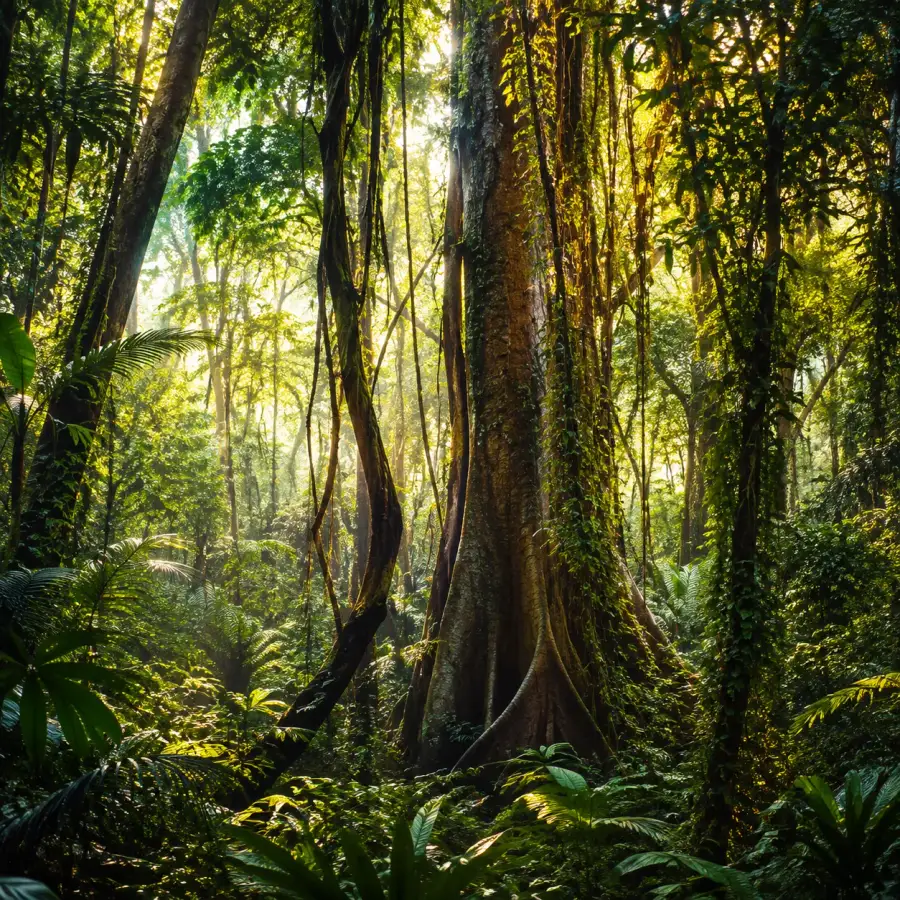
Xishuangbanna
China's only tropical rainforest — wild Asian elephants, ancient tea mountains, and the golden-roofed temples of the Dai minority on the Laos border.
China's only tropical rainforest — wild elephants, tea mountains and Dai culture.
About Xishuangbanna
Xishuangbanna is China's only tropical region — a 19,000 km² prefecture of rainforest, wild Asian elephants and Dai minority villages bordering Laos. The forests are home to over 5,000 plant species and the largest wild elephant population in China, and the culture is distinct from Han China: Theravada Buddhism, golden pagodas and the famous Water Splashing Festival. Most travelers spend three days: a day at Wild Elephant Valley, a day in the Botanical Garden, and a day exploring Dai villages and tea mountains.
Facts at a Glance
The physical and historical details of Xishuangbanna — useful for understanding the landscape and planning your visit.
| Landscape type | Tropical seasonal rainforest, the only one in China |
| Elevation | 500–2,000m, mostly below 1,000m |
| Area | 19,000 km² prefecture, 240 km² nature reserves |
| Climate | Tropical monsoon, dry cool winters (15–25°C), hot wet summers (25–35°C) |
| UNESCO status | Not UNESCO (a national nature reserve since 1958) |
Xishuangbanna is the heartland of the Dai people — a Tai-speaking ethnic group whose Theravada Buddhism, golden-roofed pagodas and water-splashing Songkran festival distinguish them from Han China. The region is also the original home of pu'er tea, and tea-horse-road trade with Tibet and Southeast Asia shaped local culture for centuries.
Top things to do
- See wild Asian elephants at the Wild Elephant Valley, the best place in China to spot them
- Walk the canopy walkways in the Tropical Botanical Garden, the largest in China
- Tour a Dai village and see the golden-roofed pagodas at sunset
- Visit a pu'er tea mountain and taste fresh tea from ancient trees
How to get there
Fly into Jinghong (JHG) from Kunming (45min), Shanghai, Chengdu or Bangkok. The airport is 5km from the city center. From Jinghong, take local buses, taxis or guided tours to the parks — there is no convenient public transport between the reserves.
Best time to visit
November to April, with the dry winter months (December–February) the most comfortable. The Water Splashing Festival in mid-April is a cultural highlight if you don't mind the heat. Avoid June–August for monsoon rains.
Season by season
Dry, warm (20–30°C), Water Splashing Festival in mid-April. Excellent time to combine nature and culture.
Hot (25–35°C) and very wet, with daily monsoon rain. Forest trails can be muddy; some leeches in the jungle.
Wet tail-end of the monsoon, 22–30°C. The forests are lusher, but days are partly rainy.
Dry, mild (15–25°C), clear skies. The recommended season — most comfortable, driest, best for trekking.
Suggested itinerary
Drive 1 hour from Jinghong to Wild Elephant Valley, arrive at opening for the elephant feeding, walk the canopy boardwalk.
Visit the 1,500-acre Tropical Botanical Garden, then the golden Mengle Buddhist pagoda.
Drive to a Dai village, see traditional houses and temples, then visit a pu'er tea mountain and taste fresh tea.
What it really costs
A realistic per-person day budget for Xishuangbanna, excluding international flights. Prices in CNY (1 USD ≈ 7.2 CNY).
Editor's pro tips
Five things we'd tell a friend before they go — the practical details you won't find in a brochure.
- Come in winter (December–February) — the rest of the year is hot, wet or both
- Arrive at Wild Elephant Valley at opening time (8am) — that's when the elephants are at the feeding station
- Stay in Jinghong city, not at the parks — the city has better hotels and food
- Visit a Dai village at sunset — the golden roofs in the low light are the classic Xishuangbanna image
- Try the Dai-style barbecue and fresh tropical fruit — the food scene is a highlight